Please see a shorter version of this summary of Exodus 13-15 and what it means from a Messianic perspective below this longer presentation:
A couple of things that interest me as a side note about Exodus 13-15 well it was the first time in the history of
the Israelites that they had anything to celebrate or that a people had been from slavery by God
It is also interesting to me that while the term “Israel” was the name
given by God to Jacob and the origin story of Israelites coming about the term “Hebrews” doesn’t come about until the book of Kings except for one use in reference to Abram before he had his name change by God to Abraham wherein God gave
Abram the letter “H” in his name from “Yahweh” where it appears twice. This being in Genesis 14:13.
Derived from the verb meaning “to cross over” or “pass through” (e.g., crossing the Euphrates River to Canaan).
now my mind being as it is I couldn’t pass up the opportunity to dig deeper and see if the word “cross” as in crossover had
Messianic significance tieing the actual word Hebrew to the crucifixion and this is what I dug up..
Yes, the root meaning of ‘Ivri (Hebrew) as “to cross over” or “pass through,” linked to Abraham’s journey across the Euphrates, holds significant messianic resonance, symbolizing spiritual transitions from worldly systems to God’s covenant, a journey of faith, separation from idolatry, and embracing a new divine purpose, mirroring the Christian concept of spiritual transformation through Christ, who enables believers to “cross over” into the Kingdom of God, becoming spiritual children of Abraham
Exodus 13-15 is relevant today as a blueprint for spiritual transformation: moving from bondage (slavery/sin) through a challenging wilderness (faith-building trials) to freedom and new life in God’s provision, emphasizing
remembrance of deliverance, overcoming fear, recognizing God’s sovereignty (power over chaos/Pharaoh), and the principle of redemption (substitutionary sacrifice for freedom) that foreshadows Christ. It teaches that liberation requires ongoing trust, faith, and passing down our history to future generations to maintain spiritual identity.
Here’s a breakdown of key themes and their contemporary relevance:
Remembering God’s Power: The command to observe Passover and consecrate the firstborn isn’t just history; it’s a call to actively remember God’s saving acts in our own lives (spiritual freedom from sin) to fuel faith and gratitude today.
The Wilderness Journey: The desert isn’t just a place; it’s a metaphor for life’s hardships where we learn radical dependence on God (manna/water from rock) and develop perseverance, transforming us from former slaves (of sin/addiction/despair) into a trusting people.
Overcoming Fear: The Red Sea crossing, where Pharaoh’s army is destroyed, highlights God’s ability to conquer overwhelming obstacles and conquer our fears, replacing them with faith, power, and a sound mind.
Redemption & New Creation: The parting of the Red Sea is a “new creation” moment, symbolizing God’s power to bring life out of chaos, a theme echoed in Jesus’s resurrection, offering redemption from spiritual death.
Sovereignty & Identity: God’s judgment on Egypt’s gods and His decisive action establish His supreme rule and Israel’s unique identity, a call for believers to acknowledge God’s ultimate authority in their lives.
Passing Down Faith: The obligation to teach these stories to children ensures that the wonder of God’s deliverance isn’t lost, keeping future generations connected to their spiritual heritage.
SHORTER VERSION
The word “Hebrew” (Ivri) comes from the root meaning “to cross over”—first seen when Abram (later Abraham) crossed the Euphrates into Canaan, leaving idolatry behind. Notably, God added the letter heh (ה)—from His own name Yahweh—to Abram’s name, marking him as one set apart by divine covenant.
This act of “crossing over” is more than geography—it’s spiritual transition: from death to life, bondage to freedom, chaos to covenant. And it finds its ultimate fulfillment in Christ.
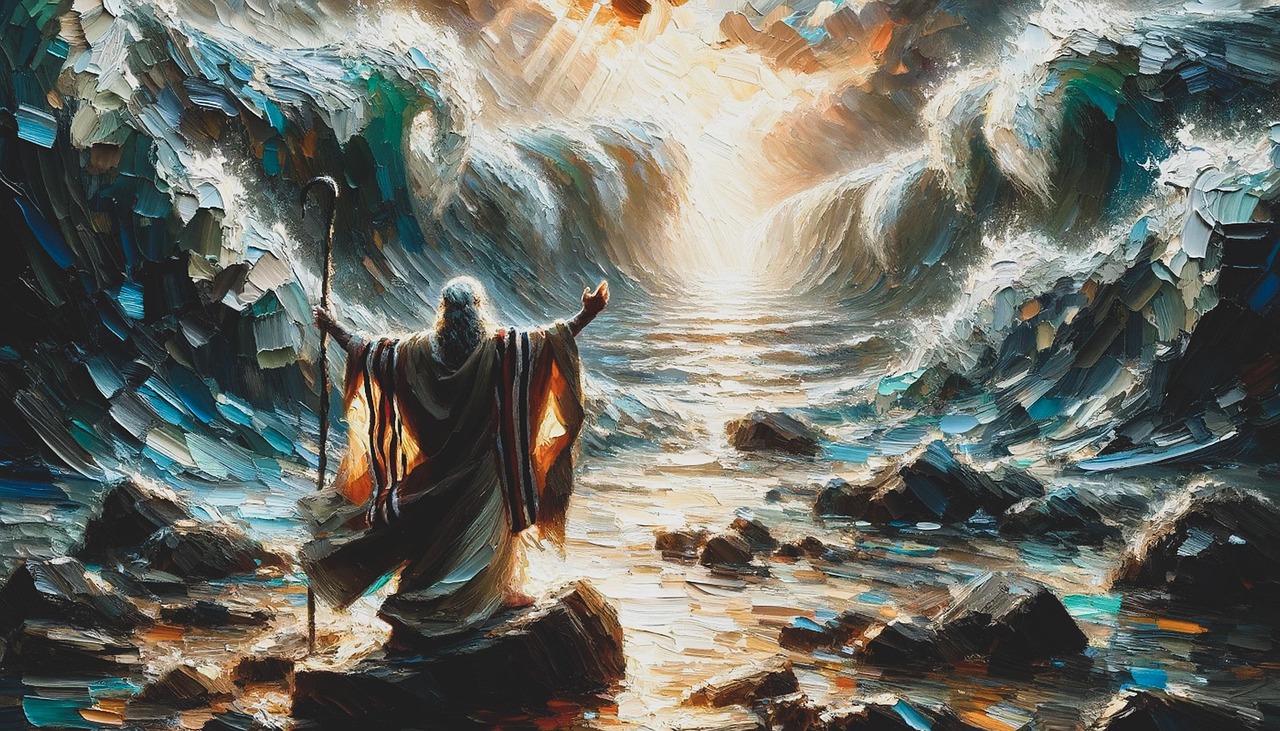
In Exodus 13–15, Israel’s passage through the Red Sea becomes the first great act of divine deliverance—a people rescued not by their strength, but by God’s power. They didn’t just escape Egypt; they passed through water into new identity, leaving Pharaoh’s dominion behind.
For believers, this is messianic foreshadowing. Just as Israel crossed through the sea to freedom, we “cross over” from death to life through Christ—our true Passover Lamb (1 Cor. 5:7). His cross is the ultimate crossing: He bore our judgment so we could pass from condemnation into grace.
Thus, every “Hebrew”—every one who crosses over by faith—participates in this redemptive pattern:
Deliverance from slavery (sin)
Passage through trial (the cross, the wilderness)
Entrance into promise (new creation).
The Red Sea wasn’t just history—it was prophecy in motion. And every time we remember what God has done, we reaffirm: we are those who have crossed over… because He made a way where there was none.