Deuteronomy 16–18 forms a crucial (meaning of and/or from the Cross) section of Moses’ final sermons, outlining the, societal, judicial, and religious structure of Israel in the Promised Land. The theme is, “The God of Time and Justice,” focusing on impartial leadership, the central worship place, and the authority of the Word.
a. Meaning for Our Lives Today
Justice and Integrity in Leadership (16:18-20, 17:8-13): These chapters demand that leaders be fair, impartial, and reject bribes. For us today, it is a call to uphold integrity in judicial systems, business, and community, pursuing “justice, and only justice”.
Worship and Stewardship (16:1-17): The instructions for feasts (Passover, Weeks, Booths) remind us to dedicate our time to worship, rejoice in God’s blessings, and give generously in proportion to how God has blessed us.
Heart-Centered Allegiance (16:21-22): The prohibition against Asherah poles (pagan idols) near God’s altar teaches that God will not share our devotion. It challenges us to remove “idols”—career, wealth, or relationships—placed before God.
Discerning Truth (18:9-22): God strictly forbids occult practices (sorcery, mediumship) and commands the testing of prophets. Today, this means discernment in a world filled with false, distracting, or deceptive voices, relying solely on Scripture.
The “King” Guidelines (17:14-20): Even if we have authority, we must not be obsessed with power, wealth, or excessive luxuries (“horses, wives, money”). Instead, we are to live humbly and, like the king, study God’s Word daily.
b. Messianic Prophetic Perspective
Deuteronomy 16–18 points forward to Jesus Christ as the ultimate fulfillment of the roles of Leader, Judge, and Prophet.
The Prophet Like Moses (18:15-19): This is the central Messianic prophecy of this section: “The LORD your God will raise up for you a prophet like me from among you… it is to him you shall listen”. Jesus is the ultimate Prophet, delivering God’s final word, superior to all others.
The Perfect Sacrifice (17:1): The law requiring unblemished animals for sacrifice points to Jesus, the sinless Lamb of God, whose sacrifice alone was perfect and accepted by God.
The Righteous Judge (16:18-20): The requirement for fair, unbiased judgment is perfectly fulfilled in Jesus, who is both the ultimate Judge of the world and the Righteous One.
The True “Place” of Worship (16:2-6): The instruction to worship only at “the place the LORD chooses” is fulfilled in Christ, who is the true temple and the only mediator between God and man, replacing the localized, earthly tabernacle.
The King Who Follows the Law (17:18-20): Jesus is the King who does not turn back to Egypt (sin) or multiply earthly wealth, but who perfectly follows the Father’s Law.
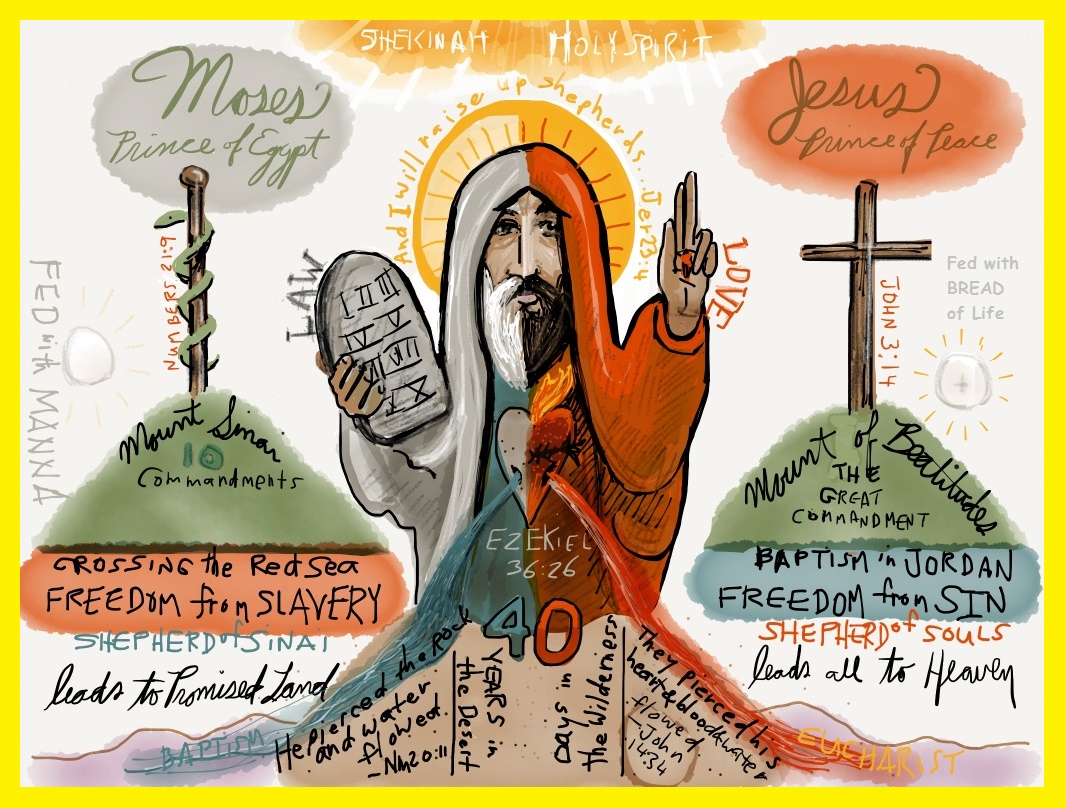
Building on Deuteronomy 18:15, where Moses promises a future prophet “like me,” here are 10 striking ways their lives and missions are comparable:
1. Threatened at Birth: Both were born under a decree by an evil ruler to kill all male Hebrew infants—Pharaoh in Egypt and King Herod in Bethlehem.
2. Exiles in Egypt: Both were hidden or sheltered in Egypt as young children to escape death and were later called out by God to begin their missions.
3. Deliverers from Bondage: Moses was the human instrument used to free Israel from physical slavery in Egypt; Jesus is the divine instrument who frees all people from spiritual slavery to sin.
4. Covenant Mediators: Both acted as the bridge between God and man. Moses mediated the Old Covenant at Sinai; Jesus mediated the New Covenant through His own blood.
5. Lawgivers on a Mountain: Moses ascended Mount Sinai to receive the Ten Commandments; Jesus ascended a mountain to deliver the Sermon on the Mount, which revealed the true intent of that Law.
6. 40 Days of Fasting: Both prepared for their public ministry with a 40-day fast in the wilderness—Moses before receiving the Law, and Jesus before his temptation.
7. Miraculous Bread from Heaven: Moses oversaw the daily provision of manna to sustain Israel; Jesus miraculously fed the 5,000 and declared Himself to be the “true bread from heaven”.
8. Faces Shone with Glory: Both experienced physical transformation in God’s presence. Moses’ face shone after speaking with God; Jesus’ face shone like the sun during the Transfiguration.
9. Intercessors for Sinners: Both offered their own lives to save their people from God’s judgment. Moses pleaded, “Please blot me out” for Israel’s sin; Jesus actually gave His life as a ransom for all.
10. Rejected by Their Own: Both were initially misunderstood and rejected by the very people they came to save, only to be later vindicated by God as their rightful leader.