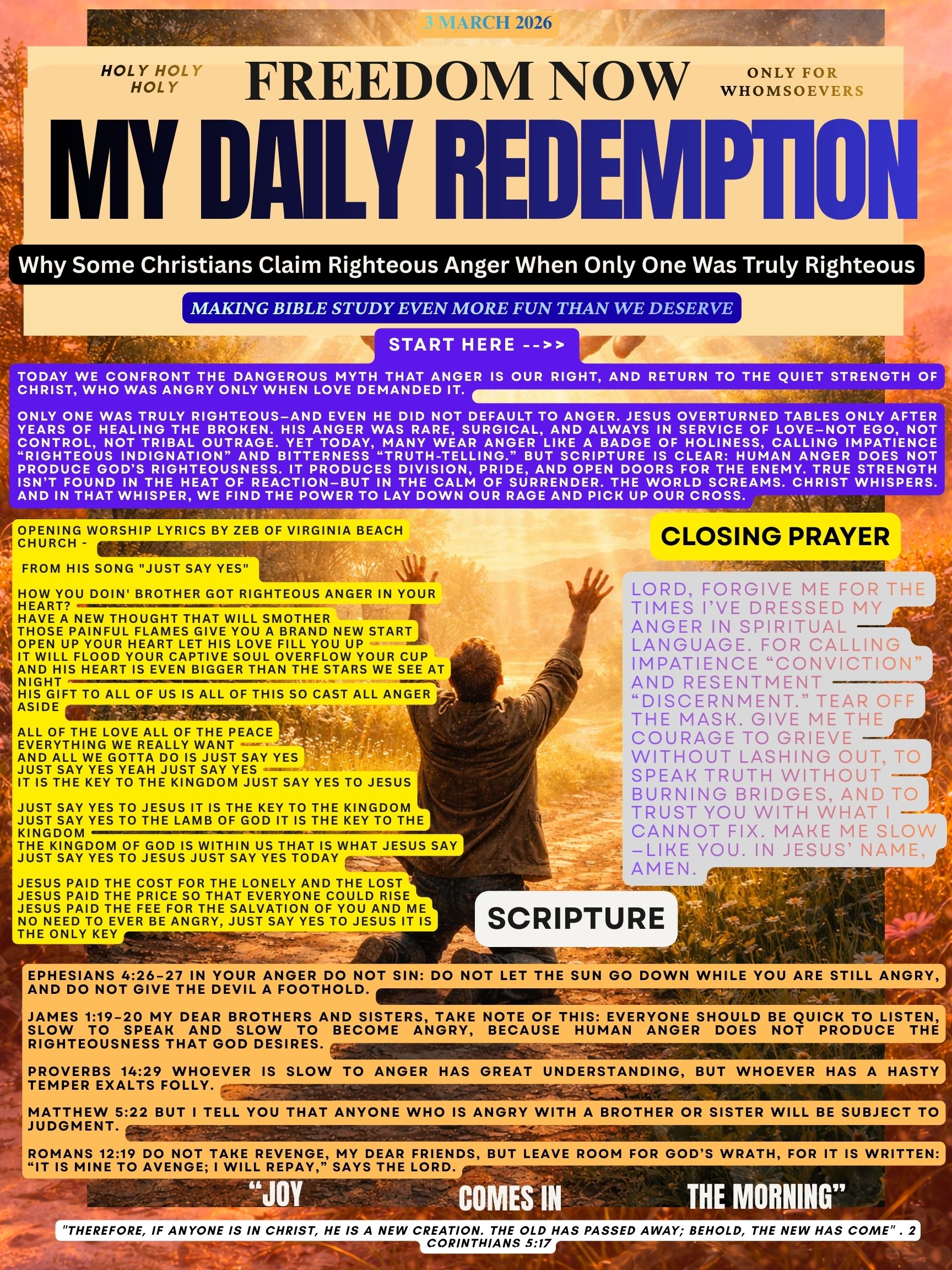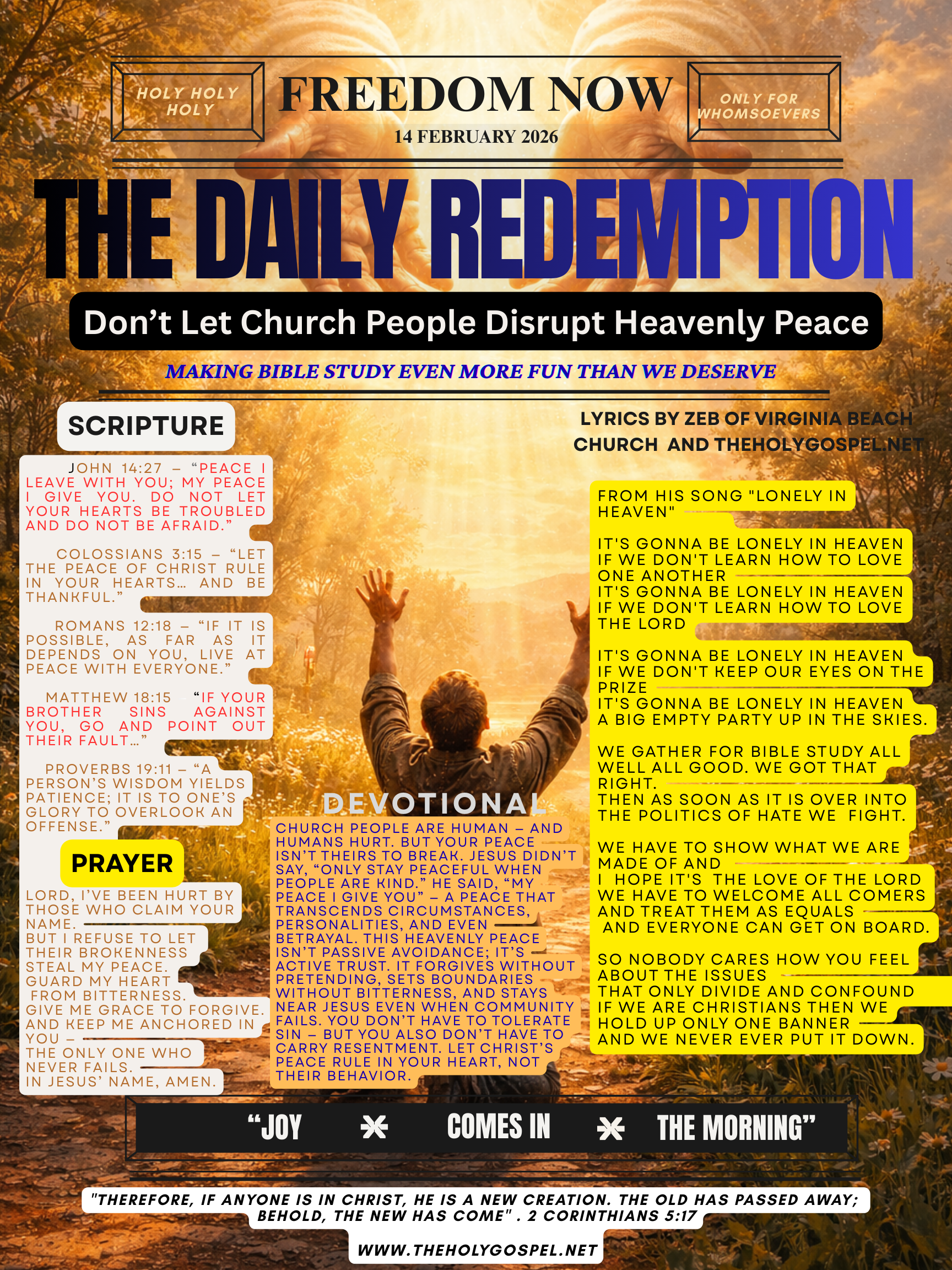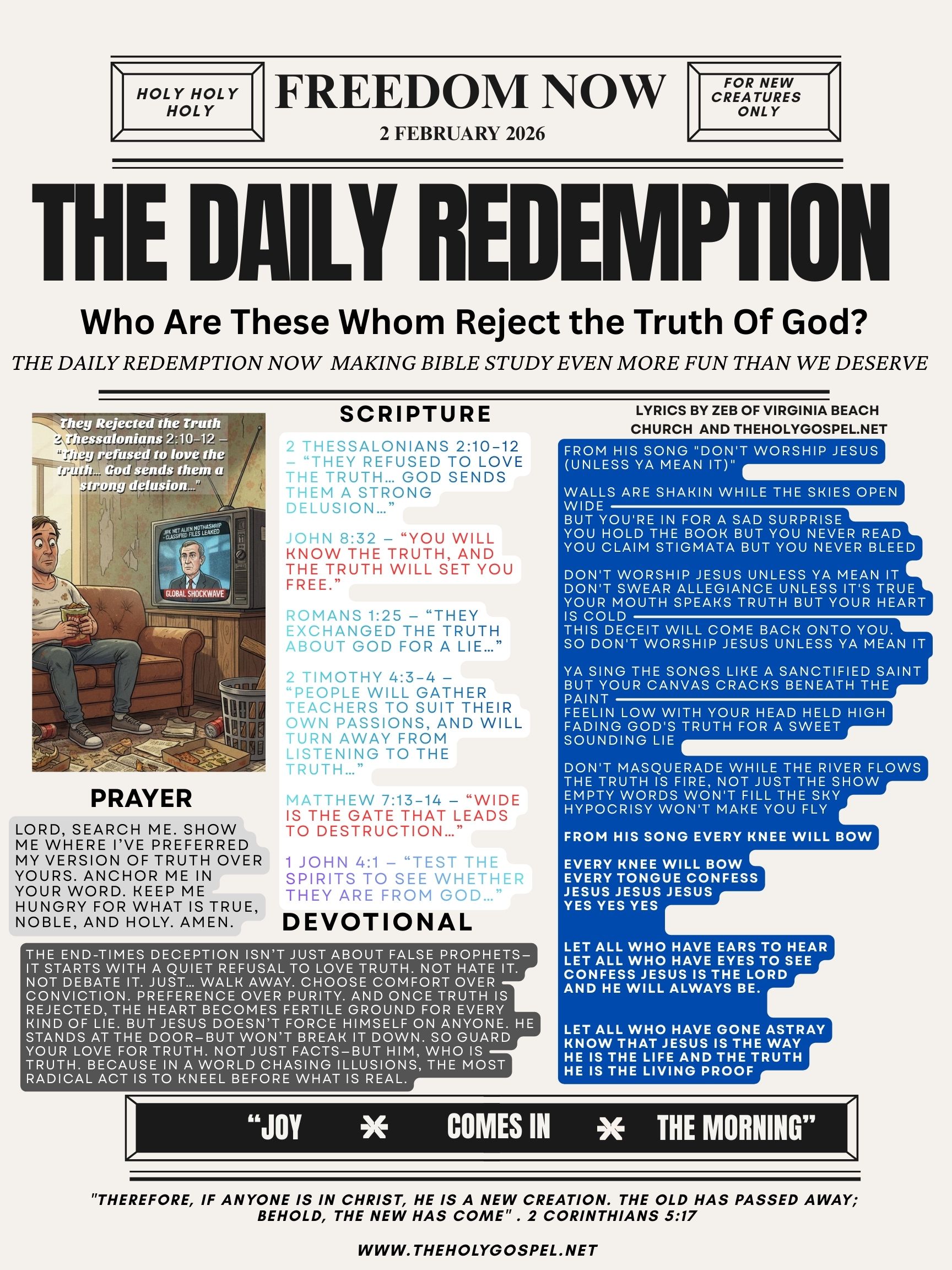
Why Some Christians Claim Righteous Anger When Only One Was Truly Righteous – DR Bible Bulletin 3 March 26

Welcome to The Daily Redemption for Tuesday, March 3, 2026 — where we confront the dangerous myth that anger is our right, and return to […]

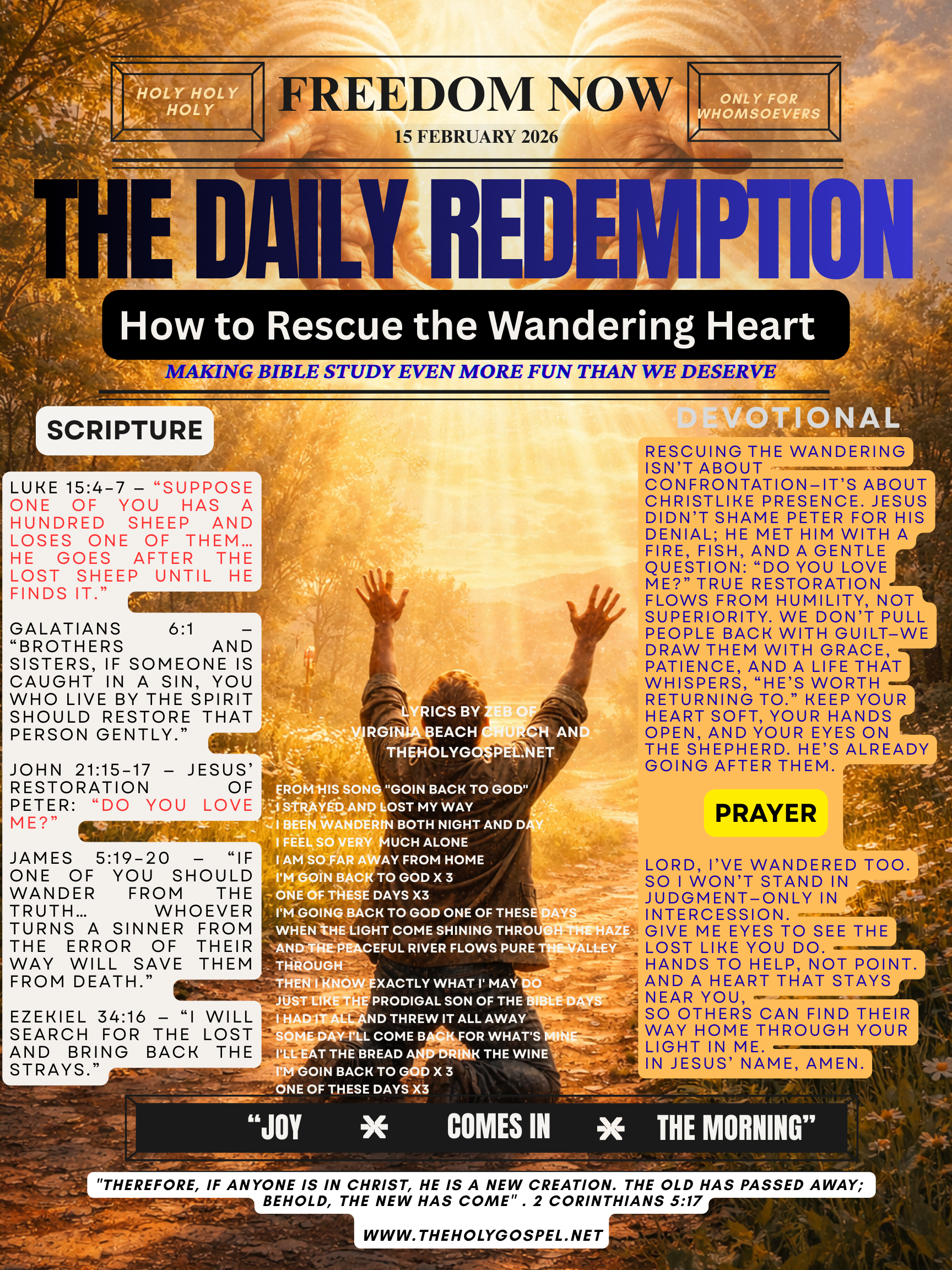
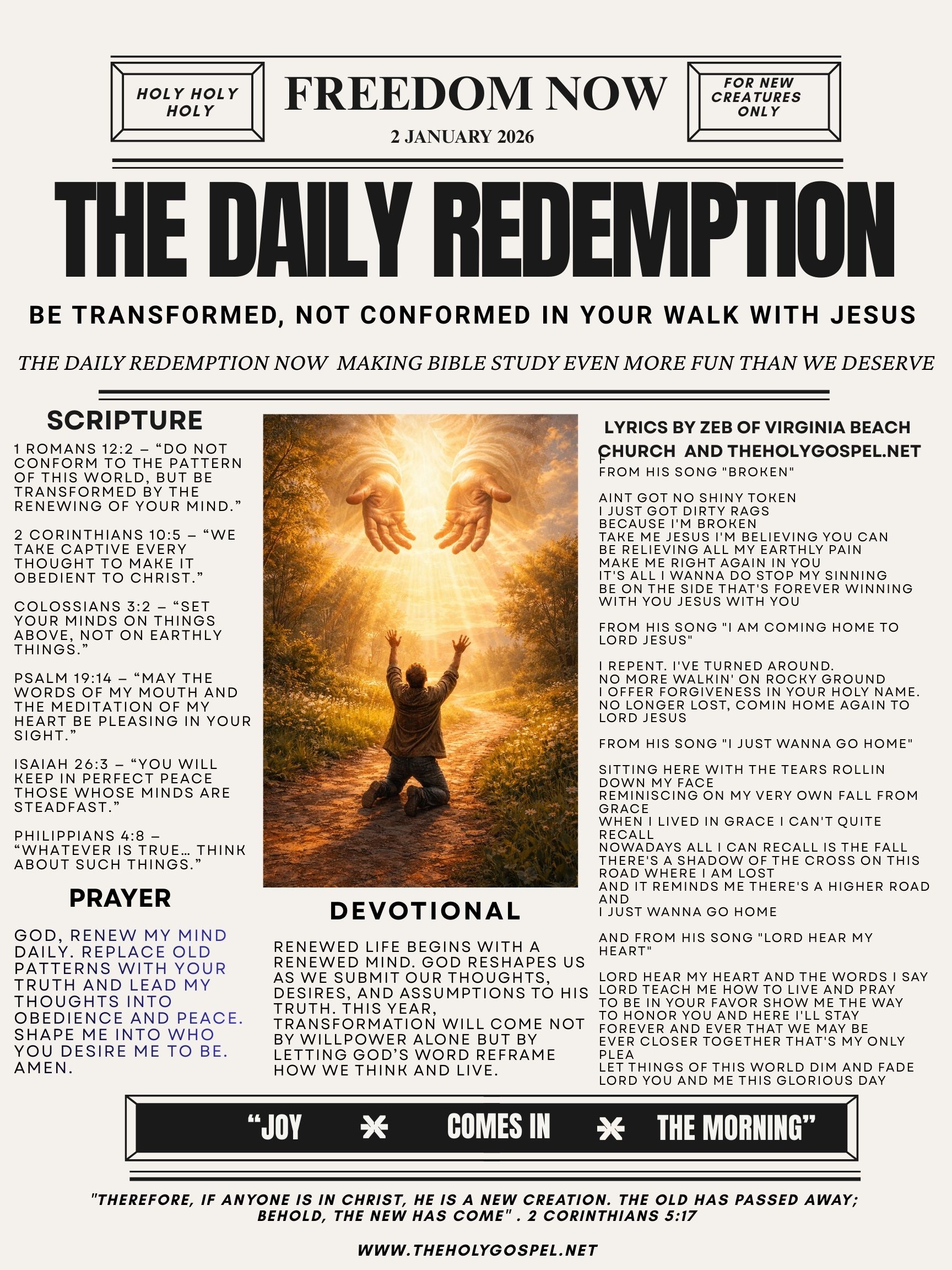
How to Rescue the Wandering Heart – DR Bible Blast Bulletin 15 Feb 26

How to Rescue the Wandering Heart Key Scripture: Luke 15:4–7 — “Suppose one of you has a hundred sheep and loses one of them… he […]

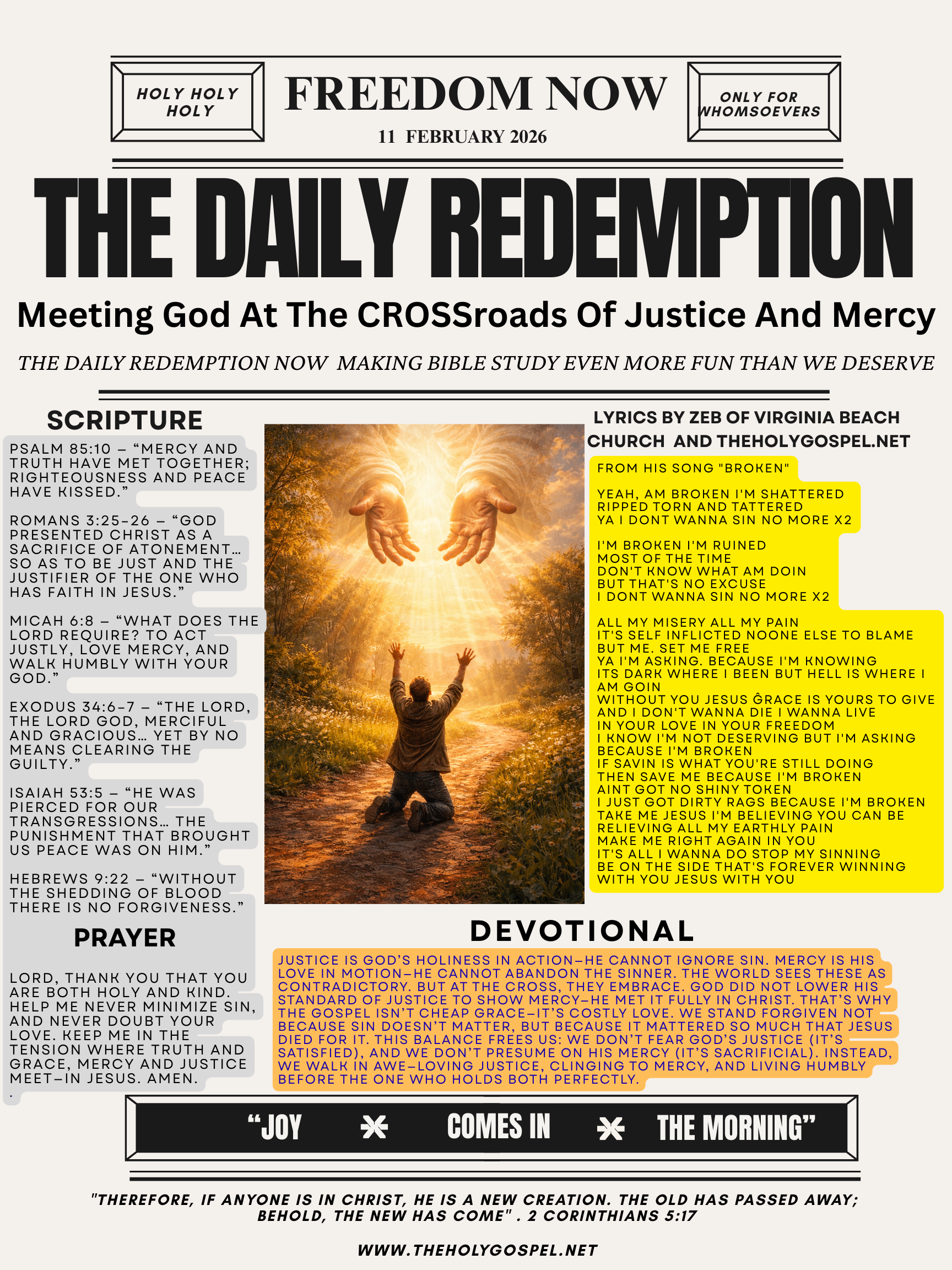
Meeting God At The CROSSroads Of Justice And Mercy – DR Bible Blast Bulletin 11 Feb 26

Psalm 85:10 — “Mercy and truth have met together; righteousness and peace have kissed.” Romans 3:25–26 — “God presented Christ as a sacrifice of atonement… […]

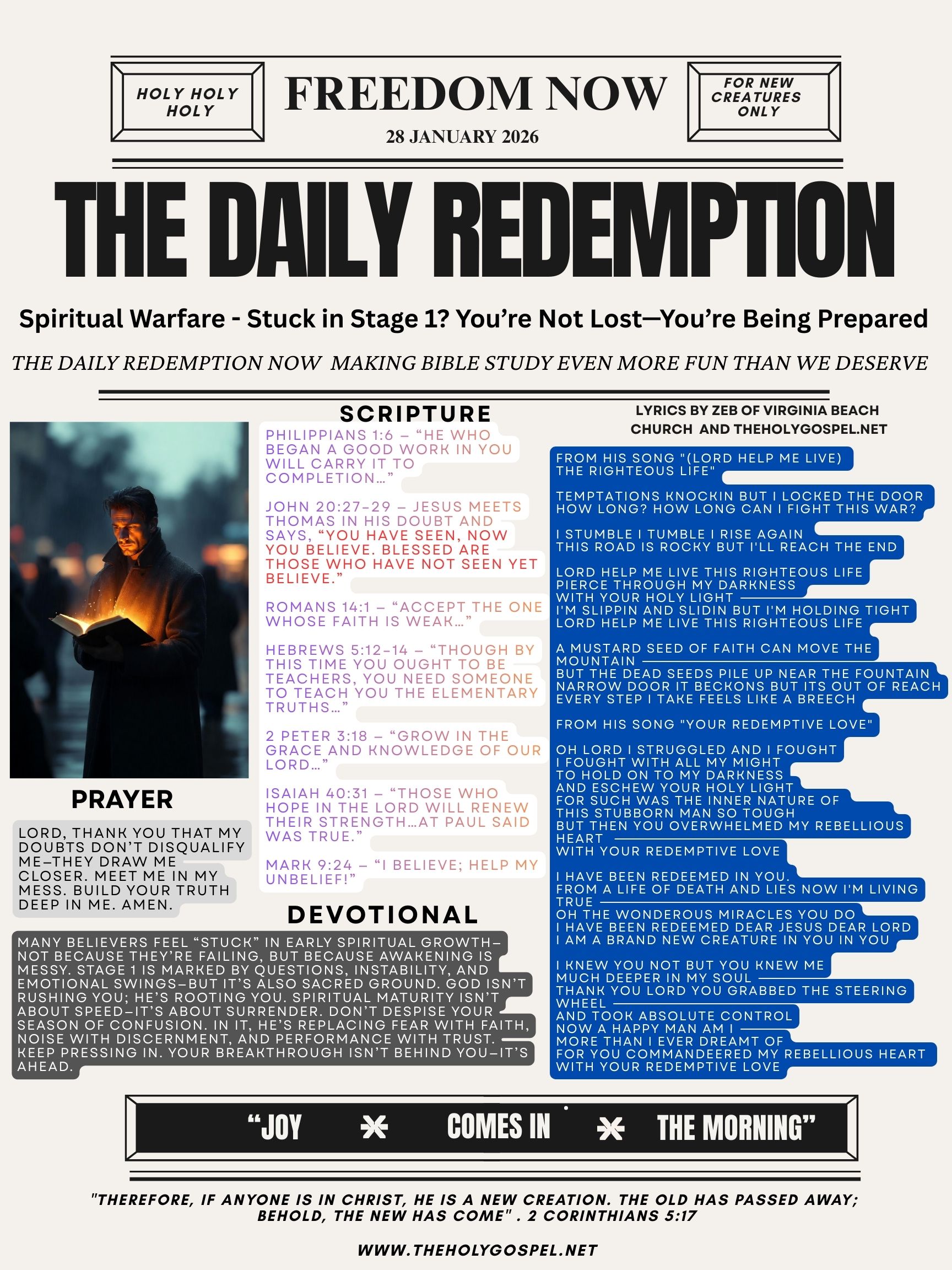
Spiritual Warfare: Stuck in Stage 1? You’re Not Lost—You’re Being Prepared – DR Bulletin – 28 Jan 26

Stuck in Stage 1? You’re Not Lost—You’re Being Prepared Philippians 1:6 — “He who began a good work in you will carry it to completion…” […]

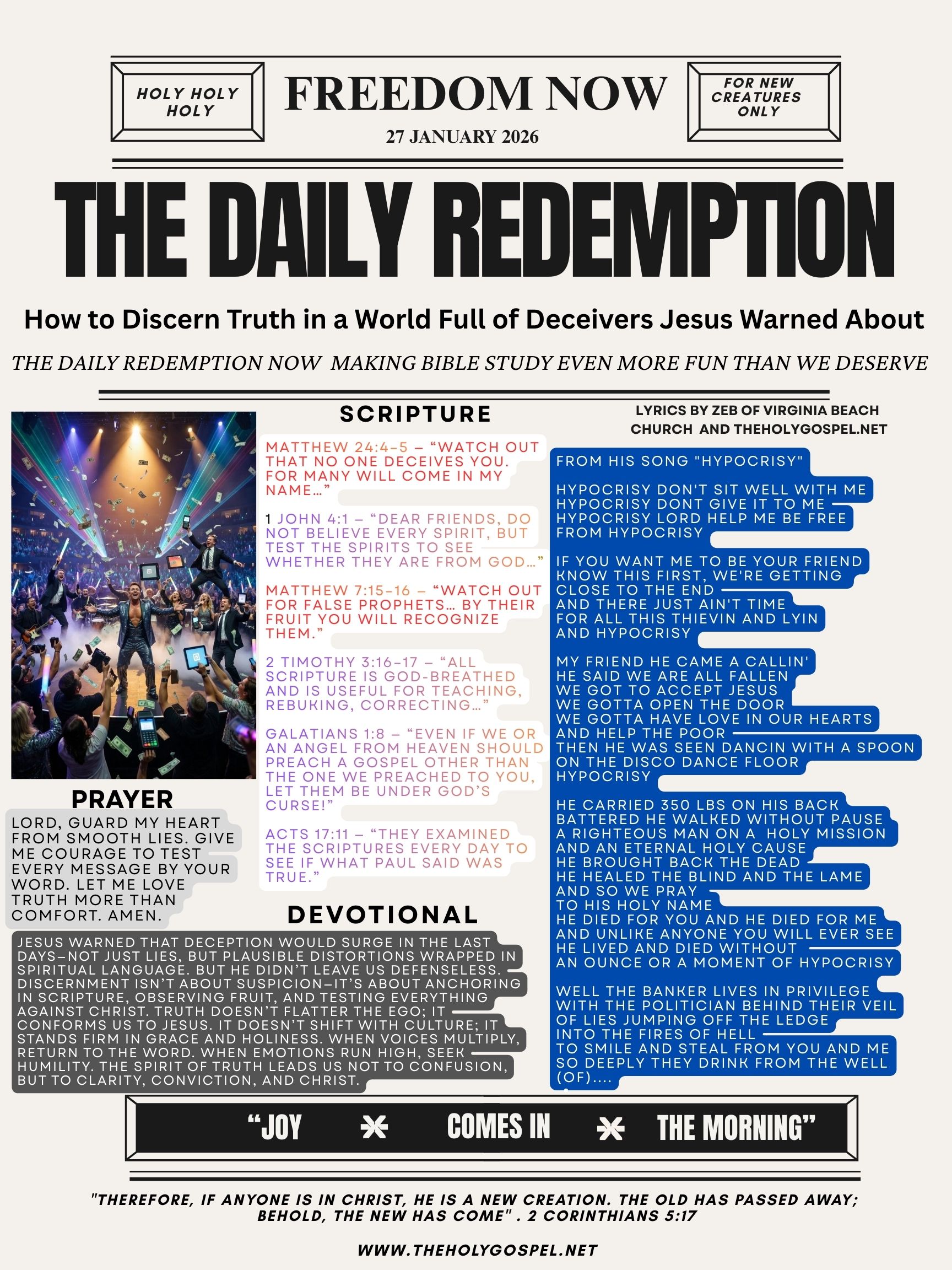
How to See Through The Smoke and Discern Truth in a World Full of Deceivers – DR Bulletin 27 Jan 26

How to Discern Truth in a World Full of Deceivers Matthew 24:4–5 — “Watch out that no one deceives you. For many will come in […]

Understanding Genuine Repentance: Insights from King David’s Life The biblical account of King David offers a powerful illustration of what authentic repentance looks like, especially in light of his serious failings. David’s Failures and God’s Perspective Even though David committed severe offenses—adultery with Bathsheba and arranging the murder of her husband Uriah—the Scriptures describe him as “a man after God’s own heart” (Acts 13:22). This designation isn’t due to perfection, but stems from his response when confronted with wrongdoing. The Heart of Authentic Confession True repentance goes beyond merely reciting a catalog of specific misdeeds, such as naming adultery or murder. In Psalm 51, David’s prayer emphasizes a profound recognition of his deeper condition: “Surely I was sinful at birth, sinful from the time my mother conceived me” (Psalm 51:5, NIV). This admission of an innate sinful disposition from conception sets genuine repentance apart from superficial apologies focused only on isolated acts. Pitfalls in Contemporary Approaches to Repentance A common mistake today is to treat repentance as a checklist of individual transgressions—praying, for instance, “Forgive me for this specific habit or thought.” While God is fully aware of every detail, He seeks a more profound humility: an honest confrontation with our core human brokenness and separation from His holiness. The Impossibility of Self-Generated Righteousness Scripture reinforces this in Job 14:4: “Who can bring what is pure from the impure? No one!” Humanity, tainted by sin from the beginning, cannot produce true goodness through willpower alone. Consider the example of a permanent black marker—it can only produce black lines, never blue. Similarly, without divine intervention, our efforts yield nothing eternally pure. The Path to Transformation: Complete Dependence on God Real change doesn’t come from striving harder to reform ourselves or minimizing flaws through self-improvement. Such attempts are ultimately ineffective, like trying to refine something fundamentally flawed. Instead, the key is to abandon confidence in personal strength, fully surrendering self-reliance, and trusting God to impart His own righteousness. This shift—from self-trust to God-dependence—opens the door to lasting renewal and freedom.

Understanding Genuine Repentance: Insights from King David’s Life The biblical account of King David offers a powerful illustration of what authentic repentance looks like, especially […]