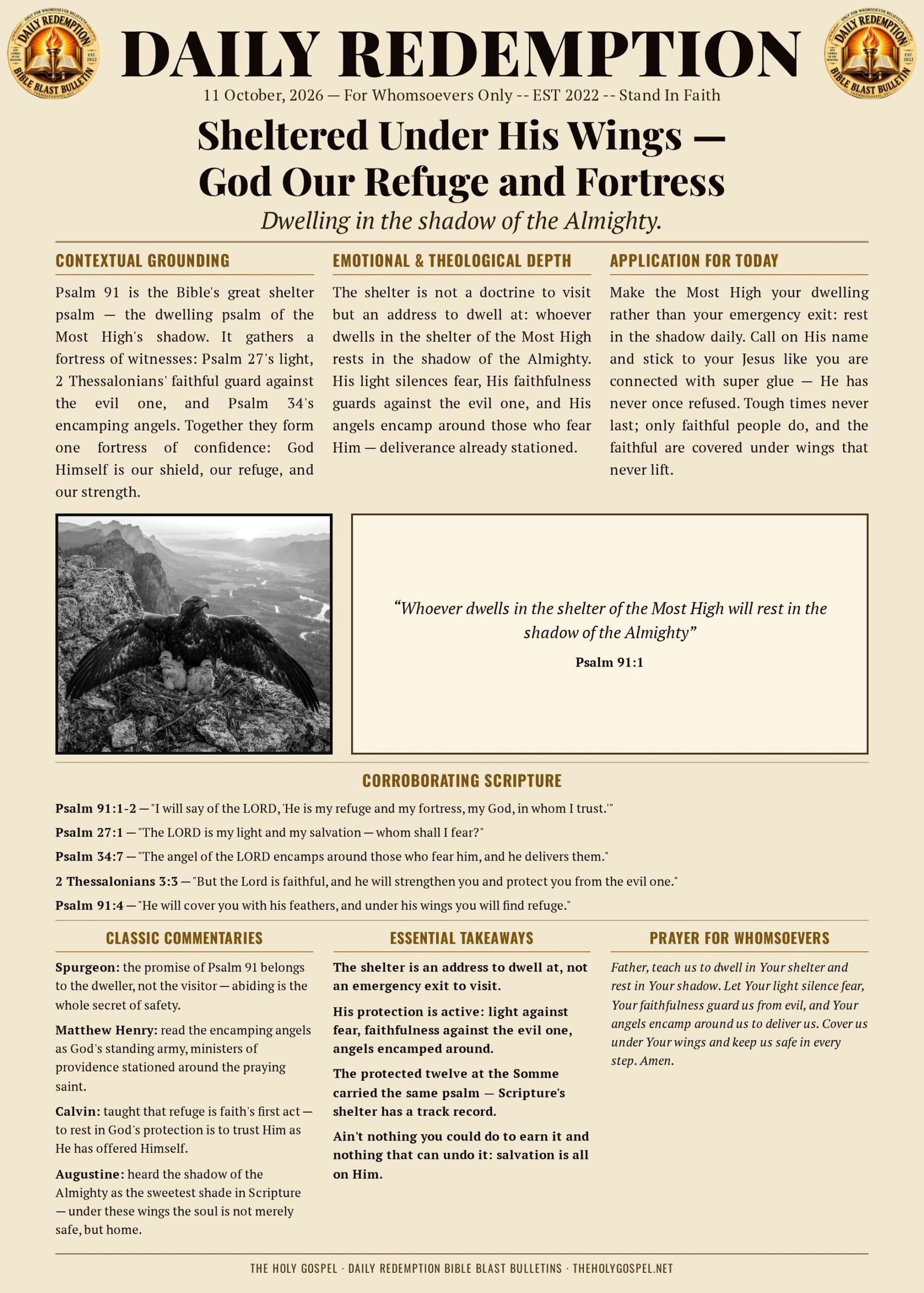
Psalm 91 is the Bible’s great shelter psalm: whoever dwells in the shelter of the Most High rests in the shadow of the Almighty. Its fortress is fourfold — His light silences fear, His faithfulness guards against the evil one, His angels encamp around those who fear Him, and His wings cover His own. The promise is not for visitors but dwellers: God Himself is our refuge, our fortress, and our shield. From the “protected twelve” at the Somme to every whomsoever who calls His name today, the shelter holds because the Shelterer is faithful. Contextual Grounding Psalm 91 is the Bible’s great shelter psalm — the dwelling psalm of the Most High’s shadow. It gathers a fortress of corroborating witnesses: Psalm 27 declares that His light drives out fear, 2 Thessalonians confirms His faithfulness as active protection against the evil one, and Psalm 34 adds the assurance that His angels encamp around those who fear Him, delivering them in times of danger. Together these verses form one fortress of confidence: God Himself is our shield, our refuge, and our strength. Emotional & Theological Depth The shelter is not a doctrine to visit but an address to dwell at: whoever dwells in the shelter of the Most High rests in the shadow of the Almighty. His light silences fear, His faithfulness guards against the evil one, and His angels encamp around those who fear Him — deliverance already stationed, not summoned in a panic. If heaven is the fullness of God’s love, the shadow of the Almighty is its near edge, and the door to it stands open all day. Scripture’s shelter has a track record, too. Psalm 91 has been called the most powerful prayer of protection ever written, and history keeps furnishing footnotes. During World War One, a young British soldier named Private William Hopwood carried a small card with Psalm 91 written on it — a parting gift from his mother — into the Battle of the Somme, the deadliest day in British military history, with over 60,000 casualties. Shell after shell exploded around his position and machine-gun fire raked no man’s land, yet William walked through it all without a scratch. After the battle he discovered that eleven other men in his unit were carrying copies of the same psalm — and every single one of them survived. The men started calling them “the protected twelve,” and the story survives in the regiment’s war records. Whatever the mysteries of providence, the shelter of the Most High is not a rumor. Zeb has sung the shelter from the guitar side, from his song “I Ain’t Perfect But I’m Saved”: ain’t nothin I could do, my salvation Lord is all on you… let me tell ya, I ain’t perfect but I’m saved. And from “When The Troubles Come”: tough times never last, only faithful people do; that’s why I am stickin to my Jesus like we’re connected with super glue; I call his name and I am saved — he has never once refused; that’s why this ol’ guitar man ain’t singin the lonesome blues. Application For Today Make the Most High your dwelling rather than your emergency exit. Rest in the shadow daily — not only when the shells find your stretch of the line. Call on His name and stick to your Jesus like you are connected with super glue, because He has never once refused. Tough times never last; only faithful people do, and the faithful do not merely survive — they dwell, covered under wings that never lift.
Category: Psalms
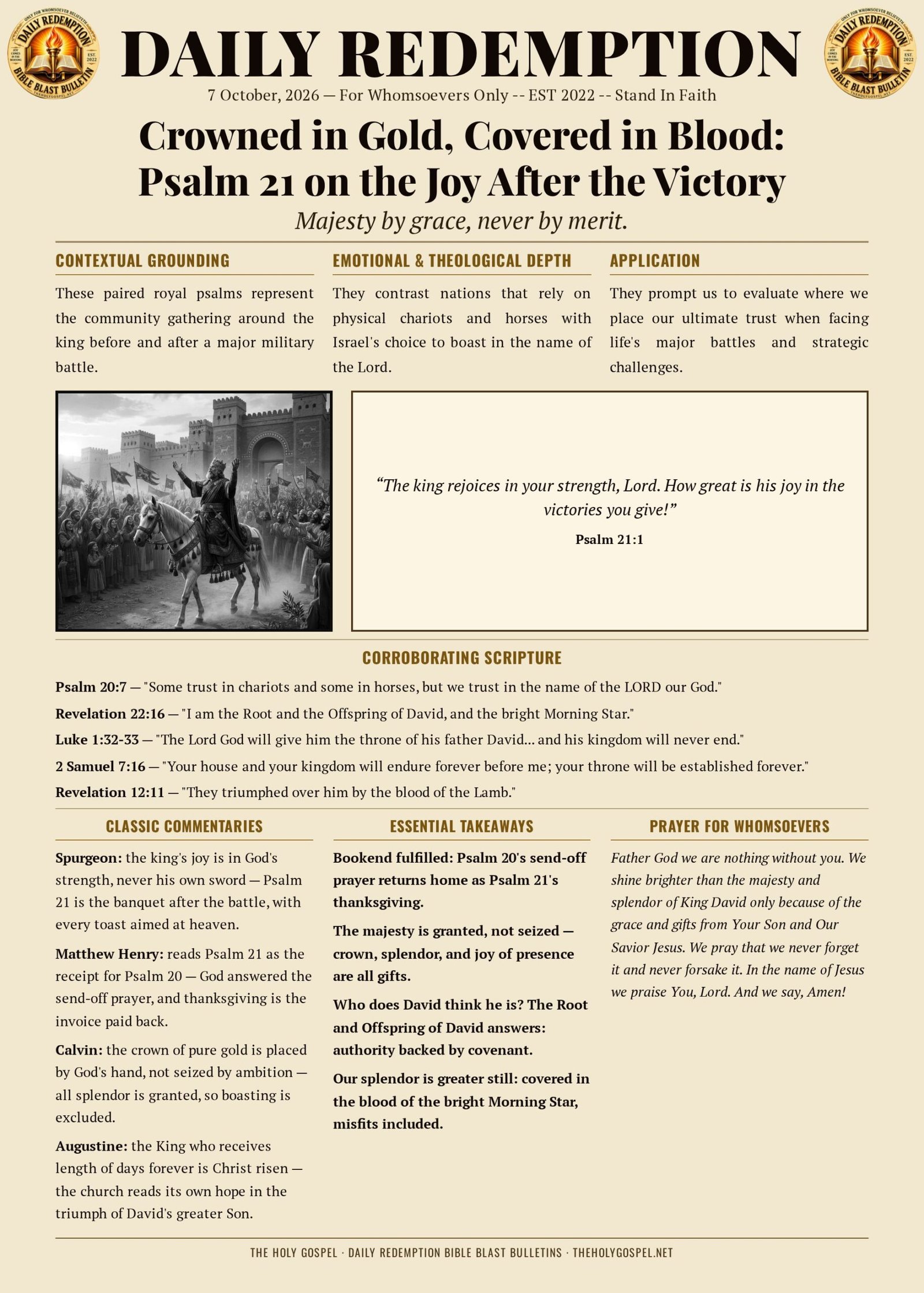
Crowned in Gold, Covered in Blood: Psalm 21 on the Joy After the Victory
Psalm 21 is the homecoming half of the royal pair: the king returns from the battle Psalm 20 sent him to, and the rejoicing attributes everything to the Lord — victories, crown, length of days, the joy of His presence. Who does this David guy think he is, telling the Lord He has bestowed splendor and majesty on him? Zeb lets the text answer: royal authority backed by God’s explicit covenant, the man after God’s own heart, ancestor of the Root and Offspring of David whose throne will never end. And ours is greater still: not through our own works, but because misfits covered in the blood of the bright Morning Star shine brighter than any majesty David ever claimed. Psalm 21 1 The king rejoices in your strength, Lord. How great is his joy in the victories you give! 2 You have granted him his heart’s desire and have not withheld the request of his lips. 3 You came to greet him with rich blessings and placed a crown of pure gold on his head. 4 He asked you for life, and you gave it to him — length of days, for ever and ever. 5 Through the victories you gave, his glory is great; you have bestowed on him splendor and majesty. 6 Surely you have granted him unending blessings and made him glad with the joy of your presence. 7 For the king trusts in the Lord; through the unfailing love of the Most High he will not be shaken. 8 Your hand will lay hold on all your enemies; your right hand will seize your foes. 9 When you appear for battle, you will burn them up as in a blazing furnace. The Lord will swallow them up in his wrath, and his fire will consume them. 10 You will destroy their descendants from the earth, their posterity from mankind. 11 Though they plot evil against you and devise wicked schemes, they cannot succeed. 12 You will make them turn their backs when you aim at them with drawn bow. 13 Be exalted in your strength, Lord; we will sing and praise your might. Who Does This David Guy Think He Is Anyway? Who does this David guy think he is anyway? Telling the Lord that He has bestowed on him splendor and majesty? Whoa!? Well, remember these things… Jesus says “I am the Root and the Offspring of David, and the bright Morning Star” — Revelation 22:16 The angel Gabriel tells Mary that God will give Jesus “the throne of his father David,” and His kingdom will never end — Luke 1:32-33 Yahweh called him a “man of His own heart” His royal authority was backed by God’s explicit covenant and choosing, not self-promotion — and usually we find David demonstrating great humility and honoring the Lord for his blessings, in battle and otherwise. And What Does This Have to Do With Us? Not at all through our own works do we receive and are we blessed with everything that David claims here, but only through the undeserved grace of God’s gift — and because putting on the full armor of God means only this: remembering and giving attributes to that we are covered in the blood of Jesus. We are righteous because Yahweh looks at us and sees His Son. It only helps if we follow in David’s path by glorifying and exalting the glory and righteousness of God. Woe be to the backslider who chooses Hell over the Heavenly riches of God.
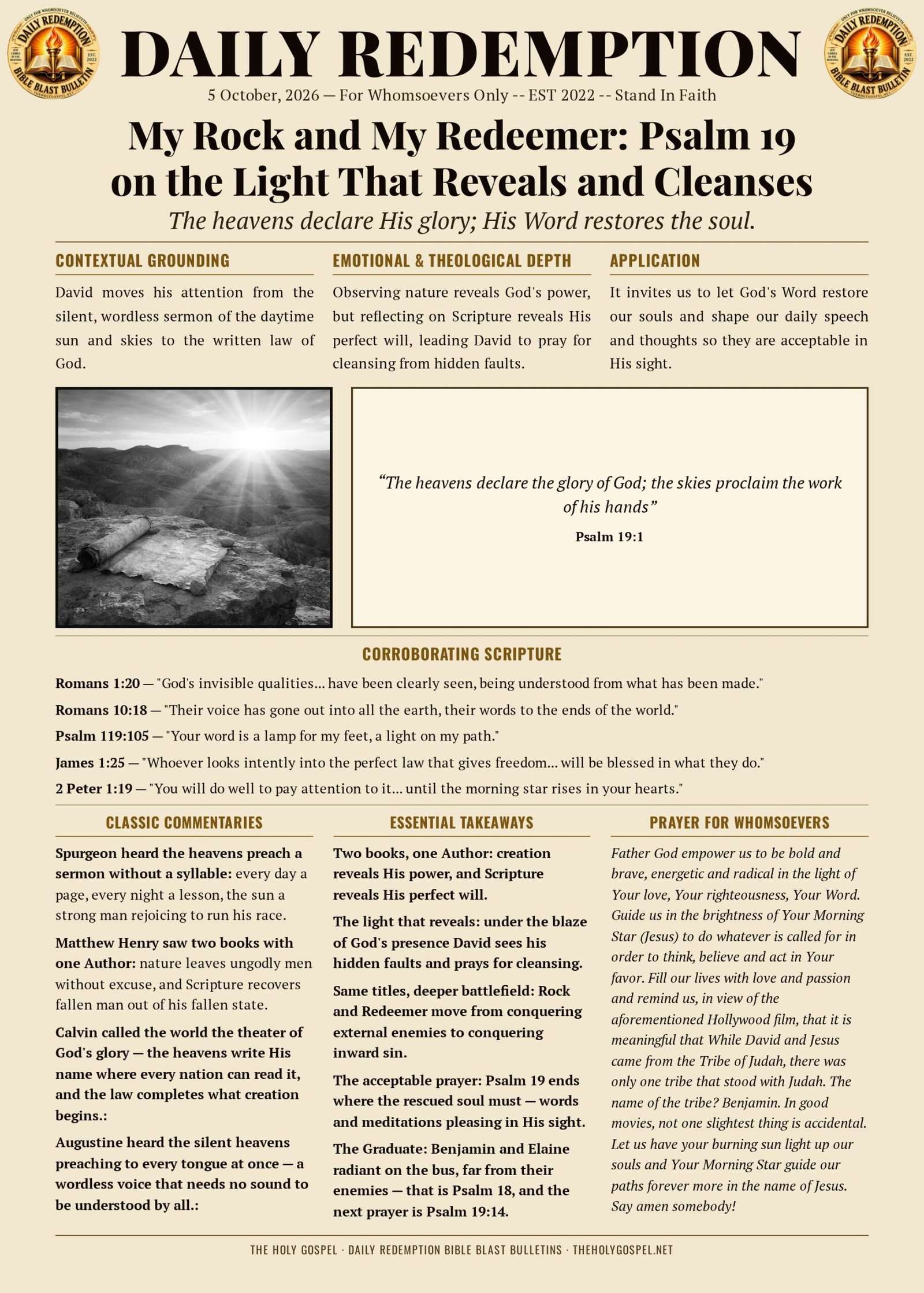
My Rock and My Redeemer: Psalm 19 on the Light That Reveals and Cleanses
Psalm 19 opens with God’s first book — the heavens pouring out a wordless sermon, day after day, until their voice reaches the ends of the world — and then turns to His second, the perfect law that refreshes the soul and makes wise the simple. Under that double light David sees what the battlefield never showed him: his own hidden faults, and he prays to be cleansed. The Rock and Redeemer who conquered his external enemies in Psalm 18 is revealed as the only one who can conquer his internal brokenness, so the psalm ends where every rescued soul must: “May these words of my mouth and this meditation of my heart be pleasing in your sight, LORD, my Rock and my Redeemer.” Psalm 19 For the director of music. A psalm of David. 1 The heavens declare the glory of God; the skies proclaim the work of his hands. 2 Day after day they pour forth speech; night after night they reveal knowledge. 3 They have no speech, they use no words; no sound is heard from them. 4 Yet their voice goes out into all the earth, their words to the ends of the world. In the heavens God has pitched a tent for the sun. 5 It is like a bridegroom coming out of his chamber, like a champion rejoicing to run his course. 6 It rises at one end of the heavens and makes its circuit to the other; nothing is deprived of its warmth. 7 The law of the LORD is perfect, refreshing the soul. The statutes of the LORD are trustworthy, making wise the simple. 8 The precepts of the LORD are right, giving joy to the heart. The commands of the LORD are radiant, giving light to the eyes. 9 The fear of the LORD is pure, enduring forever. The decrees of the LORD are firm, and all of them are righteous. 10 They are more precious than gold, than much pure gold; they are sweeter than honey, than honey from the honeycomb. 11 By them your servant is warned; in keeping them there is great reward. 12 But who can discern their own errors? Forgive my hidden faults. 13 Keep your servant also from willful sins; may they not rule over me. Then I will be blameless, innocent of great transgression. 14 May these words of my mouth and this meditation of my heart be pleasing in your sight, LORD, my Rock and my Redeemer. From the Battlefield to the Sanctuary: How Psalm 18 Flows into Psalm 19 Let me help you understand how Psalm 18 flows into Psalm 19. In 18, David finds a safe and peaceful place where he can rest safely away from his enemies including Saul and he experiences his version of the Genesis 7th day of creation. He rests. Not to say he puts on his jammies and takes a snooze nor that God did. God looked at the creation of his handiwork and rejoiced in the goodness of His own creation. David? He looks back on the wonderous works of the Lord in protecting him and guiding him to safely and peacefully rejoices in the Lord. I say he rejoiced! Ok here is something random which you might recall from a movie from the stone age c1968, The Graduate. At the end of the film Benjamin (Dustin Hoffman) runs 5 miles to the church where Mrs Robinson’s daughter Elaine, his true love is getting married.
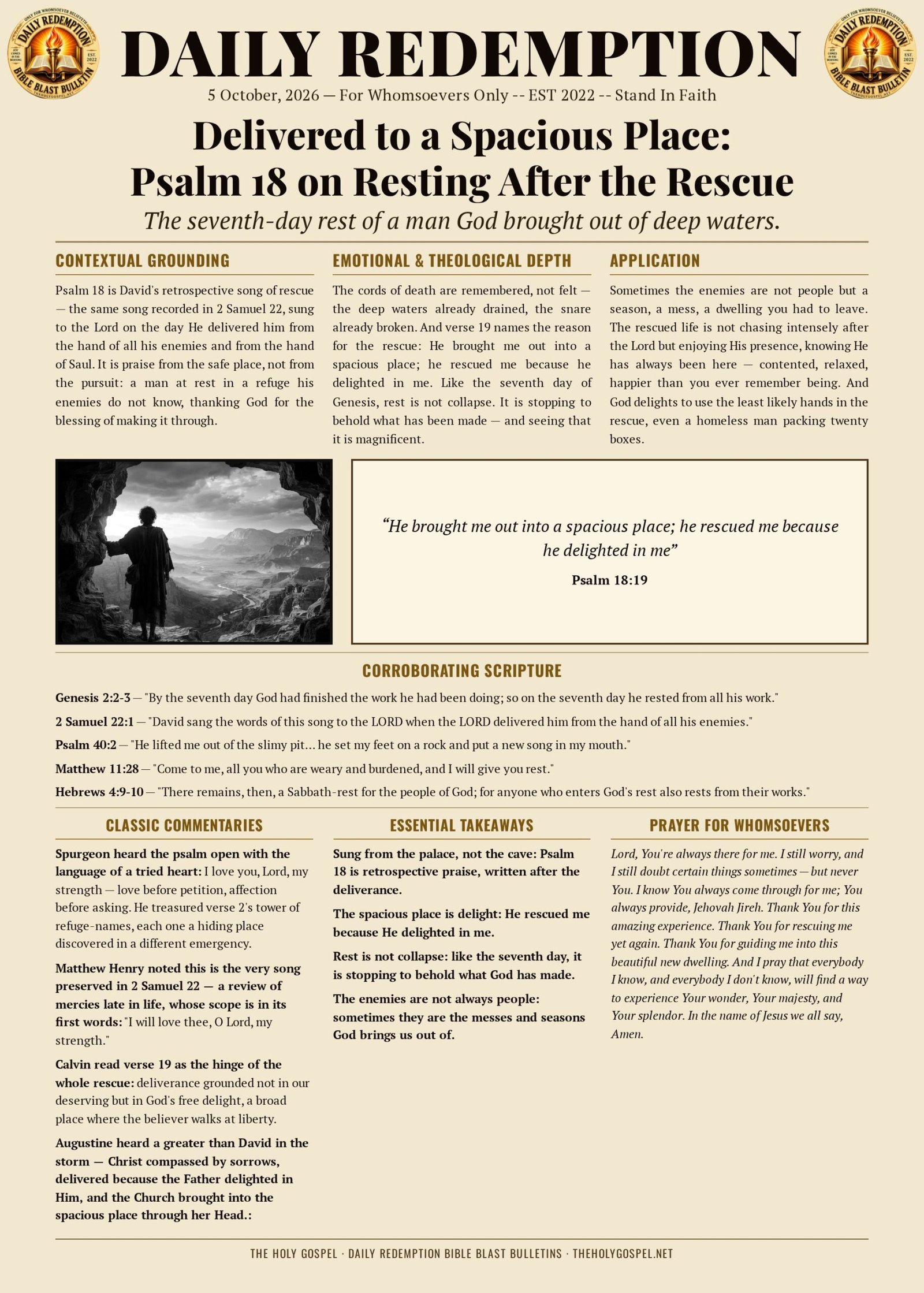
Delivered to a Spacious Place: Psalm 18 on Resting After the Rescue
Psalm 18 is David’s song from the other side of the rescue — the same song preserved in 2 Samuel 22, sung after the Lord delivered him from all his enemies and from the hand of Saul. Zeb reads it from the far side of a hellacious moving season: the old dwelling’s chaos left behind like an enemy in pursuit, and the new place standing as the “spacious place” of verse 19 — “He brought me out into a spacious place; he rescued me because he delighted in me.” Like the Lord who rested on the seventh day, the delivered soul stops striving and simply beholds what God has made — and calls it good. Praise does not always need angst; sometimes the deepest thanksgiving comes from standing in the finished rescue, contented, at rest, and happier than you have ever been. Psalm 18 For the director of music. Of David the servant of the LORD. He sang to the LORD the words of this song when the LORD delivered him from the hand of all his enemies and from the hand of Saul. He said: 1 I love you, LORD, my strength. 2 The LORD is my rock, my fortress and my deliverer; my God is my rock, in whom I take refuge, my shield and the horn of my salvation, my stronghold. 3 I called to the LORD, who is worthy of praise, and I have been saved from my enemies. 4 The cords of death entangled me; the torrents of destruction overwhelmed me. 5 The cords of the grave coiled around me; the snares of death confronted me. 6 In my distress I called to the LORD; I cried to my God for help. From his temple he heard my voice; my cry came before him, into his ears. 7 The earth trembled and quaked, and the foundations of the mountains shook; they trembled because he was angry. 8 Smoke rose from his nostrils; consuming fire came from his mouth, burning coals blazed out of it. 9 He parted the heavens and came down; dark clouds were under his feet. 10 He mounted the cherubim and flew; he soared on the wings of the wind. 11 He made darkness his covering, his canopy around him— the dark rain clouds of the sky. 12 Out of the brightness of his presence clouds advanced, with hailstones and bolts of lightning. 13 The LORD thundered from heaven; the voice of the Most High resounded. 14 He shot his arrows and scattered the enemy, with great bolts of lightning he routed them. 15 The valleys of the sea were exposed and the foundations of the earth laid bare at your rebuke, LORD, at the blast of breath from your nostrils. 16 He reached down from on high and took hold of me; he drew me out of deep waters. 17 He rescued me from my powerful enemy, from my foes, who were too strong for me. 18 They confronted me in the day of my disaster, but the LORD was my support. 19 He brought me out into a spacious place; he rescued me because he delighted in me. 20 The LORD has dealt with me according to my righteousness; according to the cleanness of my hands he has rewarded me. 21 For I have kept the ways of the LORD; I am not guilty of turning from my God. 22 All his laws are before me; I have not turned away from his decrees. 23 I have been blameless before him and have kept myself from sin.
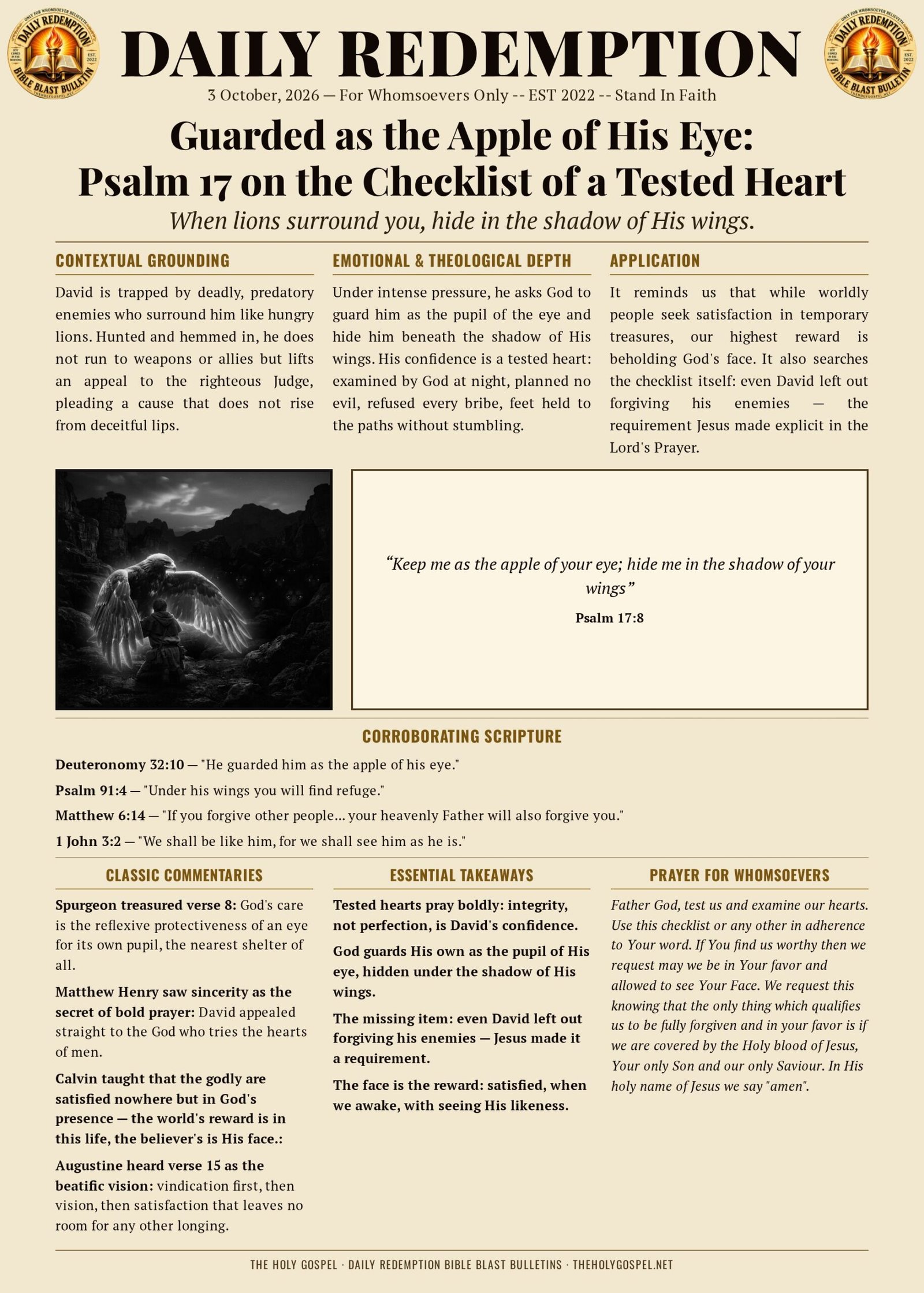
Guarded as the Apple of His Eye: Psalm 17 on the Checklist of a Tested Heart
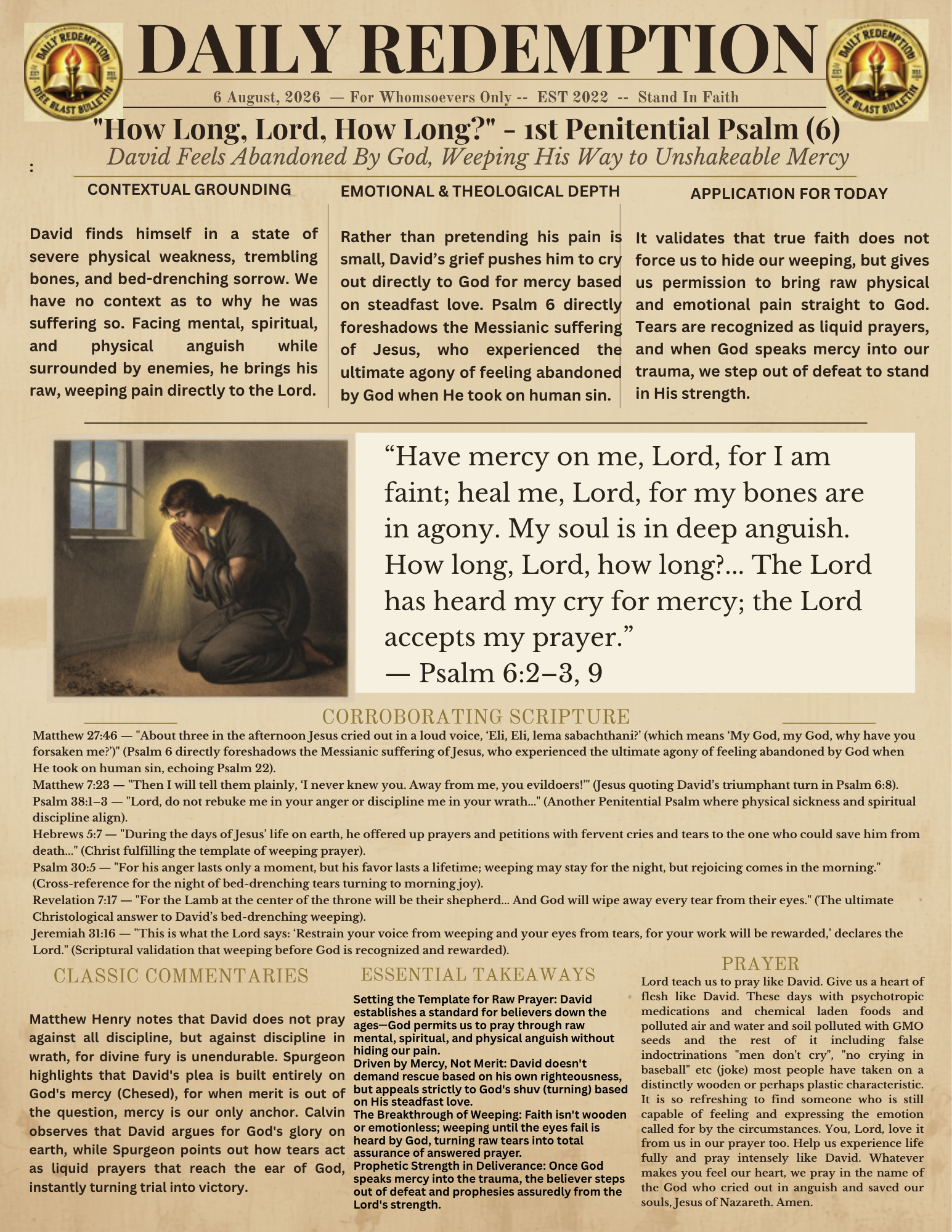
David, hunted by predatory enemies who surround him like hungry lions, appeals to God as the righteous Judge with a tested heart: lips without deceit, hands free of bribes, feet held to God’s paths. He asks to be kept as the apple of God’s eye, hidden in the shadow of His wings — yet even David’s checklist of favor is missing the one thing Jesus made explicit: forgiving our enemies so that we may be forgiven. And the psalm ends not with rescue from lions but with the reward of the tested heart: “When I awake, I will be satisfied with seeing your likeness.” A prayer of David. 1 Hear me, Lord, my plea is just; listen to my cry. Hear my prayer— it does not rise from deceitful lips. 2 Let my vindication come from you; may your eyes see what is right. 3 Though you probe my heart, though you examine me at night and test me, you will find that I have planned no evil; my mouth has not transgressed. 4 Though people tried to bribe me, I have kept myself from the ways of the violent through what your lips have commanded. 5 My steps have held to your paths; my feet have not stumbled. 6 I call on you, my God, for you will answer me; turn your ear to me and hear my prayer. 7 Show me the wonders of your great love, you who save by your right hand those who take refuge in you from their foes. 8 Keep me as the apple of your eye; hide me in the shadow of your wings 9 from the wicked who are out to destroy me, from my mortal enemies who surround me. 10 They close up their callous hearts, and their mouths speak with arrogance. 11 They have tracked me down, they now surround me, with eyes alert, to throw me to the ground. 12 They are like a lion hungry for prey, like a fierce lion crouching in cover. 13 Rise up, Lord, confront them, bring them down; with your sword rescue me from the wicked. 14 By your hand save me from such people, Lord, from those of this world whose reward is in this life. May what you have stored up for the wicked fill their bellies; may their children gorge themselves on it, and may there be leftovers for their little ones. 15 As for me, I will be vindicated and will see your face; when I awake, I will be satisfied with seeing your likeness. Recently I called someone in the church out because they were not praying with the rest of us prior to worship team rehearsal. I said “does this not involve you”? He was not in the worship team but he was present. I apologized to him for my harshness some days later. He said “don’t worry, you’re ok (with him)”. A couple of weeks later I was reminded what Jesus responded to him when someone called him “good” – only the Father in Heaven is truly good. So I started thinking along this line “wow with that endorsement and $5 I can get a small Starbucks coffee”. Here though, in Psalm 17 prayer, David asks God for protection for himself, vindication against the charges and accusations of his enemies and lays out a kind of checklist to establish if one is in God’s favor. Something like this: My heart, in prayer to You, Lord, is true, not deceitful. You have eyes that see and with Your righteous observation I stand vindicated against all charges.
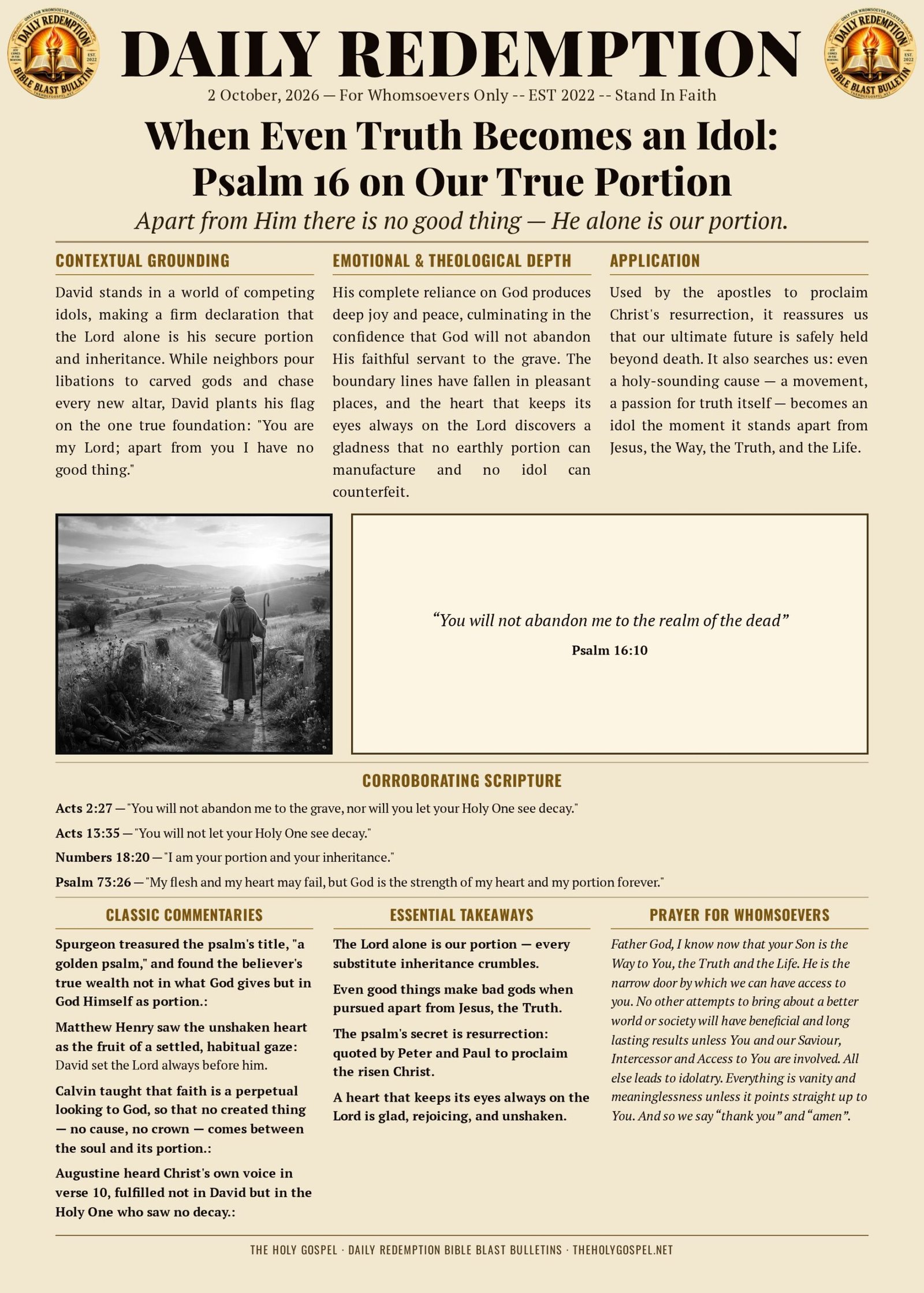
When Even Truth Becomes an Idol: Psalm 16 on Our True Portion
David stands in a world of competing idols and makes a firm declaration: the Lord alone is his portion, his cup, his delightful inheritance. The apostles seized this psalm to proclaim the very resurrection of Christ, because its deepest secret is that God will not abandon His Holy One to the grave. And in the mirror of this psalm we discover an uncomfortable but freeing truth: even a passion for truth itself becomes an idol when it is not centered in Jesus, who is the Way, the Truth, and the Life. Apart from Him, we have no good thing to offer — but with Him at our right hand, our hearts are glad, our tongues rejoice, and our bodies rest secure on the path of life. A miktam [some kind of song genre from the Bronze age] of David. 1 Keep me safe, my God, for in you I take refuge. 2 I say to the Lord, “You are my Lord; apart from you I have no good thing.” 3 I say of the holy people who are in the land, “They are the noble ones in whom is all my delight.” 4 Those who run after other gods will suffer more and more. I will not pour out libations of blood to such gods or take up their names on my lips. 5 Lord, you alone are my portion and my cup; you make my lot secure. 6 The boundary lines have fallen for me in pleasant places; surely I have a delightful inheritance. 7 I will praise the Lord, who counsels me; even at night my heart instructs me. 8 I keep my eyes always on the Lord. With him at my right hand, I will not be shaken. 9 Therefore my heart is glad and my tongue rejoices; my body also will rest secure, 10 because you will not abandon me to the realm of the dead, nor will you let your faithful one see decay. 11 You make known to me the path of life; you will fill me with joy in your presence, with eternal pleasures at your right hand. Here is something that I have been debating within myself recently. I believe it to be relevant to David’s struggling with idolaters as here in Psalm 16. Can truth be an idol? I mean I have such, and always have had such, a strong distaste for anything that is not truth. This is why I was a truth activist in 2006-2010 and a little bit afterwards. I was never aligned with any political party but I was actively out on the street with the freeway blogging and huge signs and seeking to have conversations or entice people to honk their horns in support of our message which was that we are being lied to, have been lied to and will continue to be lied to unless we say “stop” in unison, stop buying the stuff they sell us – in terms of message and commodities of all kinds and put the truth to the power and demand answers. I was not yet saved but I was on fire for the truth which I saw as anything that is not harmful lies that pervade the culture which are still today put forth by corrupt and oppressive corporations and governments. Not much to ask for right? Well it ended up turning into MAGA which was not necessarily what I had in mind. If I had a god that I believed in at the time it would not have been Jesus.
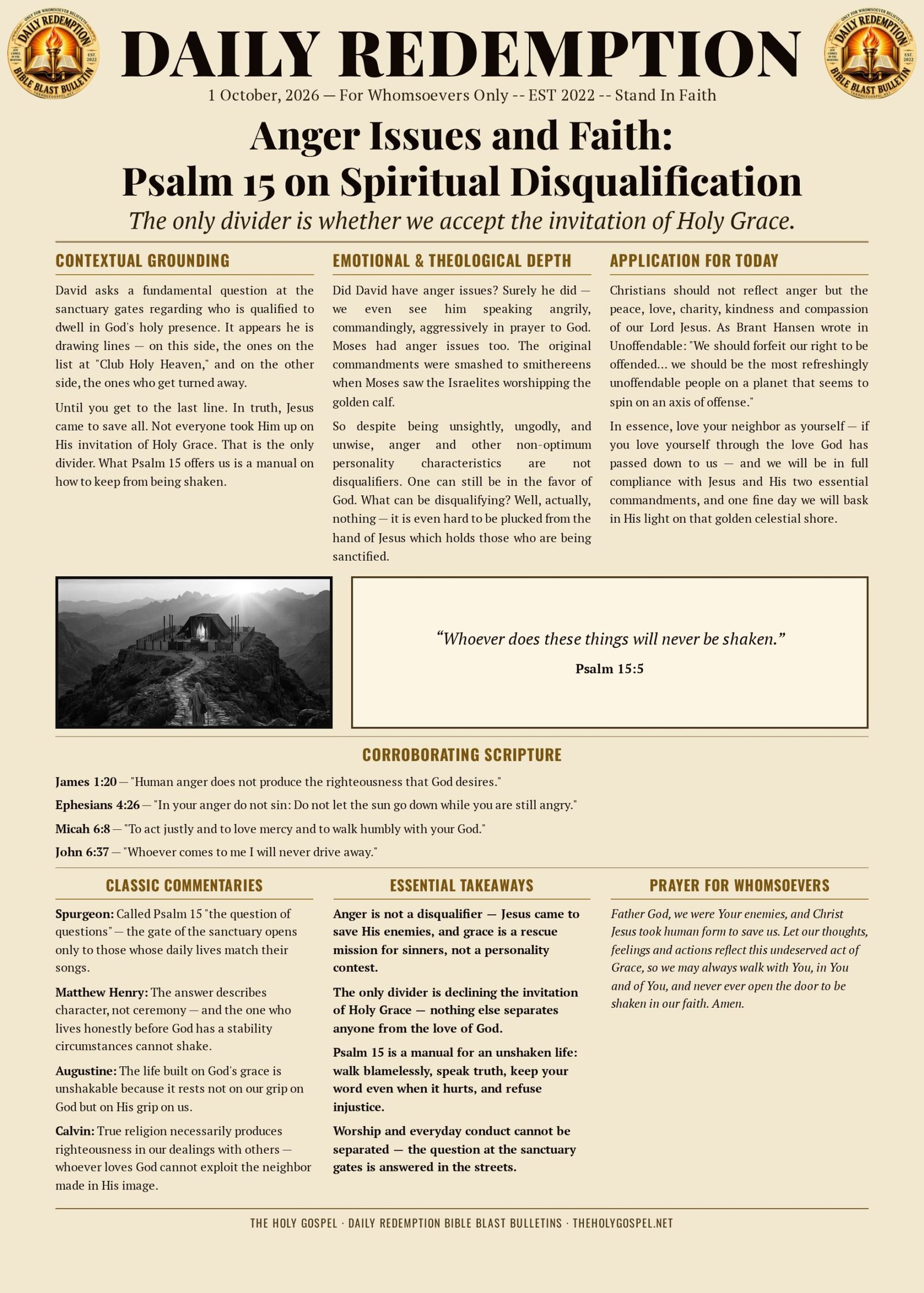
Anger Issues and Faith: Psalm 15 on Spiritual Disqualification
Psalm 15 asks the question of questions: who may dwell in God’s holy presence? David’s answer bypasses religious appearance and focuses entirely on integrity, truth, and how we treat our neighbors. And here is the good news tucked inside the inquiry: anger and other personality failings are not disqualifiers from the favor of God — Jesus came to save His enemies, and the only true divider is whether we accept His invitation of Holy Grace. Those who walk blameless before Him, loving neighbor as self, will never be shaken. Did David have anger issues? Surely he did because we even see him speaking angrily, commandingly, aggressively in prayer to God. Moses had anger issues. The original 10 commandments (the word for commandment, btw, means “words” in Hebrew) were smashed to smithereens when Moses saw the Israelis at the foot of Mt Sinai worshipping the golden calf. And yet, author Brant Hansen who wrote Unoffendable wrote this on the topic amongst 200 pages of gems: “We should forfeit our right to be offended. That means forfeiting our right to hold on to anger… I now think we should be the most refreshingly unoffendable people on a planet that seems to spin on an axis of offense.” Christians should not reflect anger but the peace, love, charity, kindness and compassion of our Lord Jesus. However the question at hand is…does anger disqualify us? And are there any other personality failings which can drive a wedge between us and the love that God has for us. If you want the short version I say this at risk that you might close the browser window and get on with your day. THIS which I say is that Jesus came to save His enemies – US! He came to save sinners and those are people that live ungodly lives. So despite being unsightly, ungodly and unwise, anger and other non-optimum personality characteristics are not disqualifiers. One can still be in the favor of God. What can be disqualifying? Well, actually, nothing, it is even hard to be plucked from the hand of Jesus which holds those who are being sanctified if one decides they want out. Jesus said to the Father – “I have not lost one that you have given me.” So what is David saying in Psalm 15? It appears he is drawing lines – on this side are the ones who are on the list at the “Club Holy Heaven” and the other side is the ones who get turned away. Until you get to the last line. In truth, Jesus came to save all. Not everyone took Him up on his invitation of Holy Grace. That is the only divider. It appears that he is drawing that line but then we get to the last line. What Psalm 15 is all about and what it offers us is a manual on how to keep from being shaken. The last word of the Psalm. In fact “one who does these things will NEVER BE SHAKEN.” And in essence what he is saying is love your neighbor as yourself (if you love your self through the love God has passed down to us) and we will be in full compliance with Jesus and His two essential commandments and one fine day we will bask in his light on that golden celestial shore. Here is the manual from David on how to never be shaken: Contextual Grounding: David asks a fundamental question at the sanctuary gates regarding who is qualified to dwell in God’s holy presence.
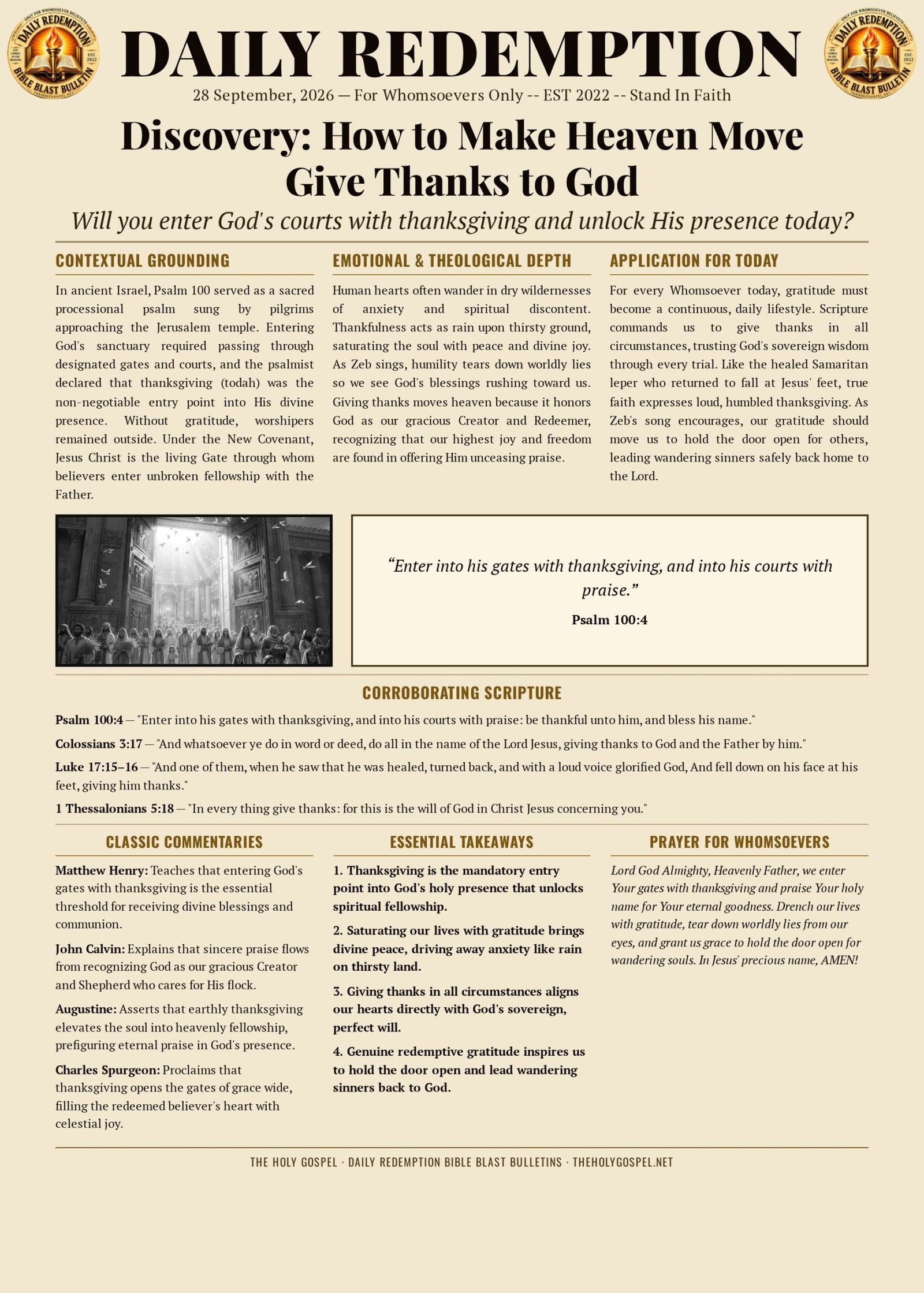
Discovery: How to Make Heaven Move — Give Thanks to God
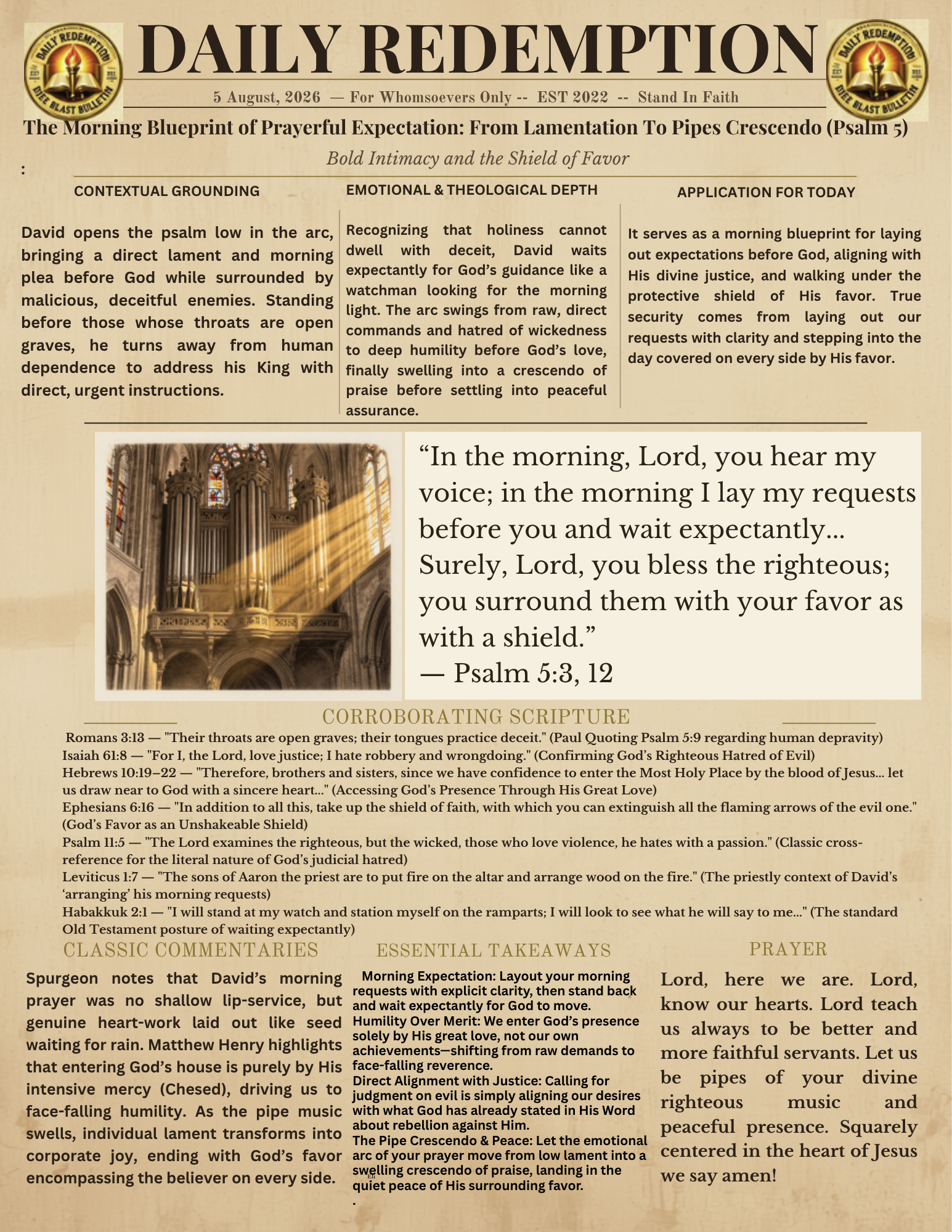
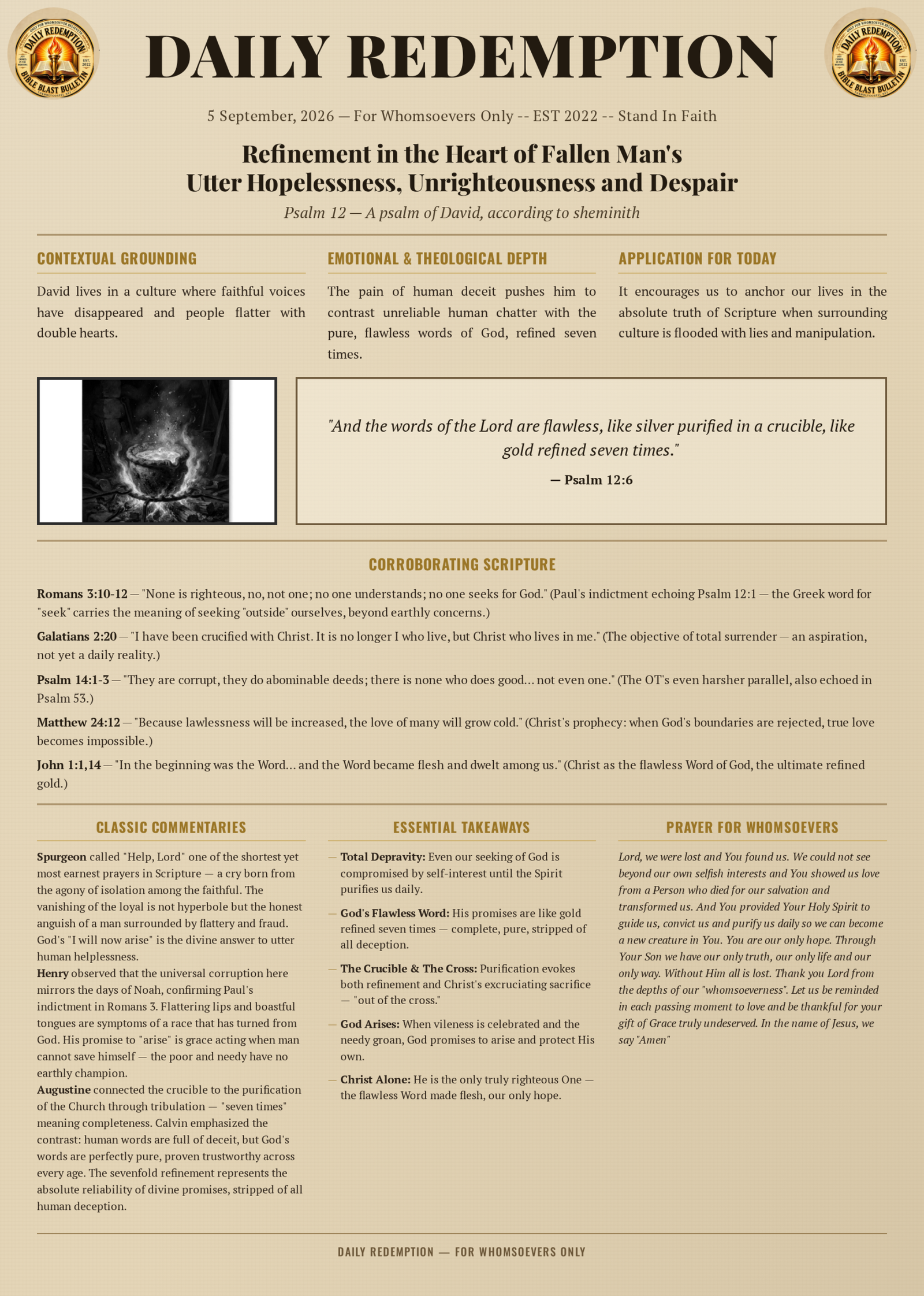
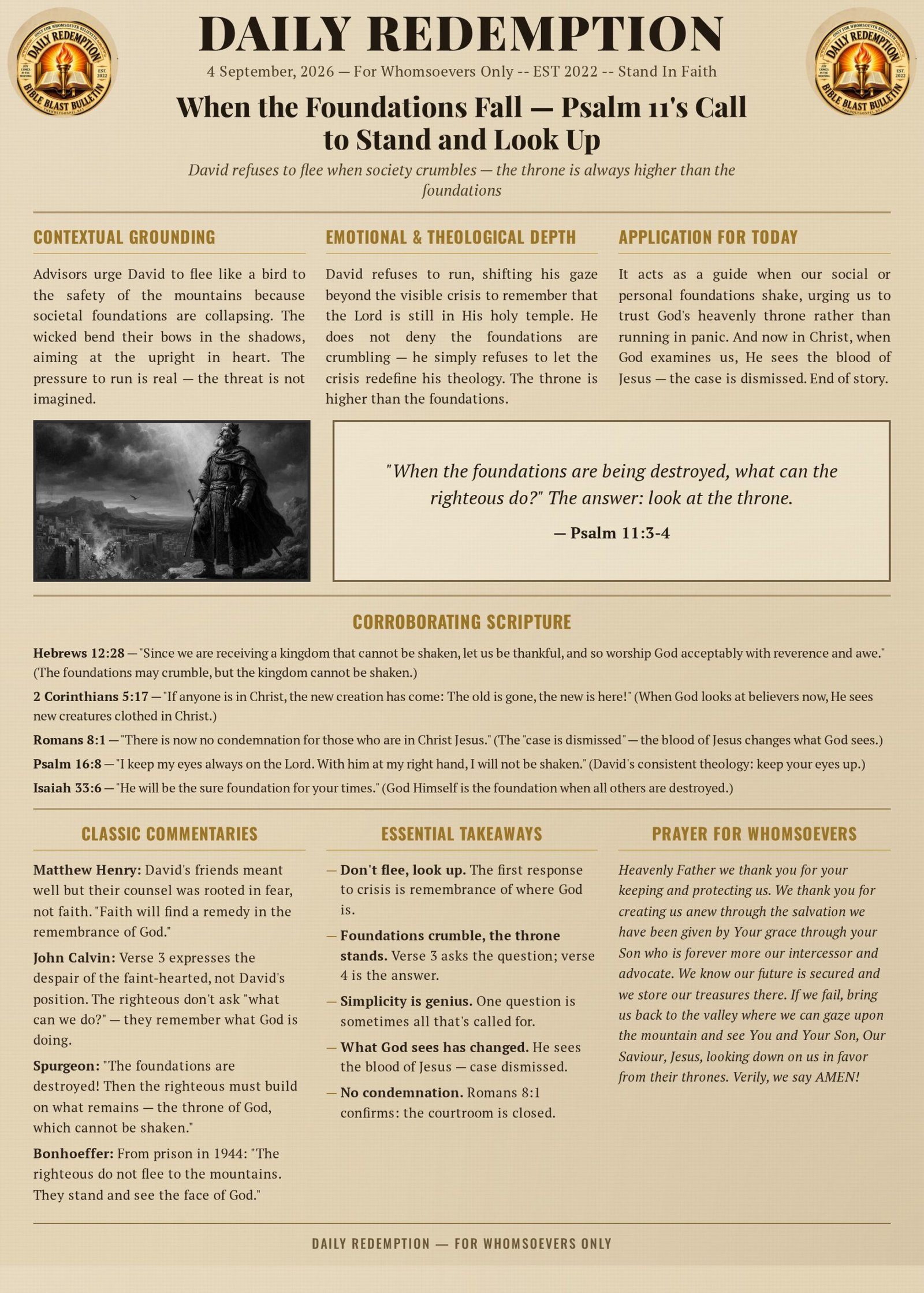
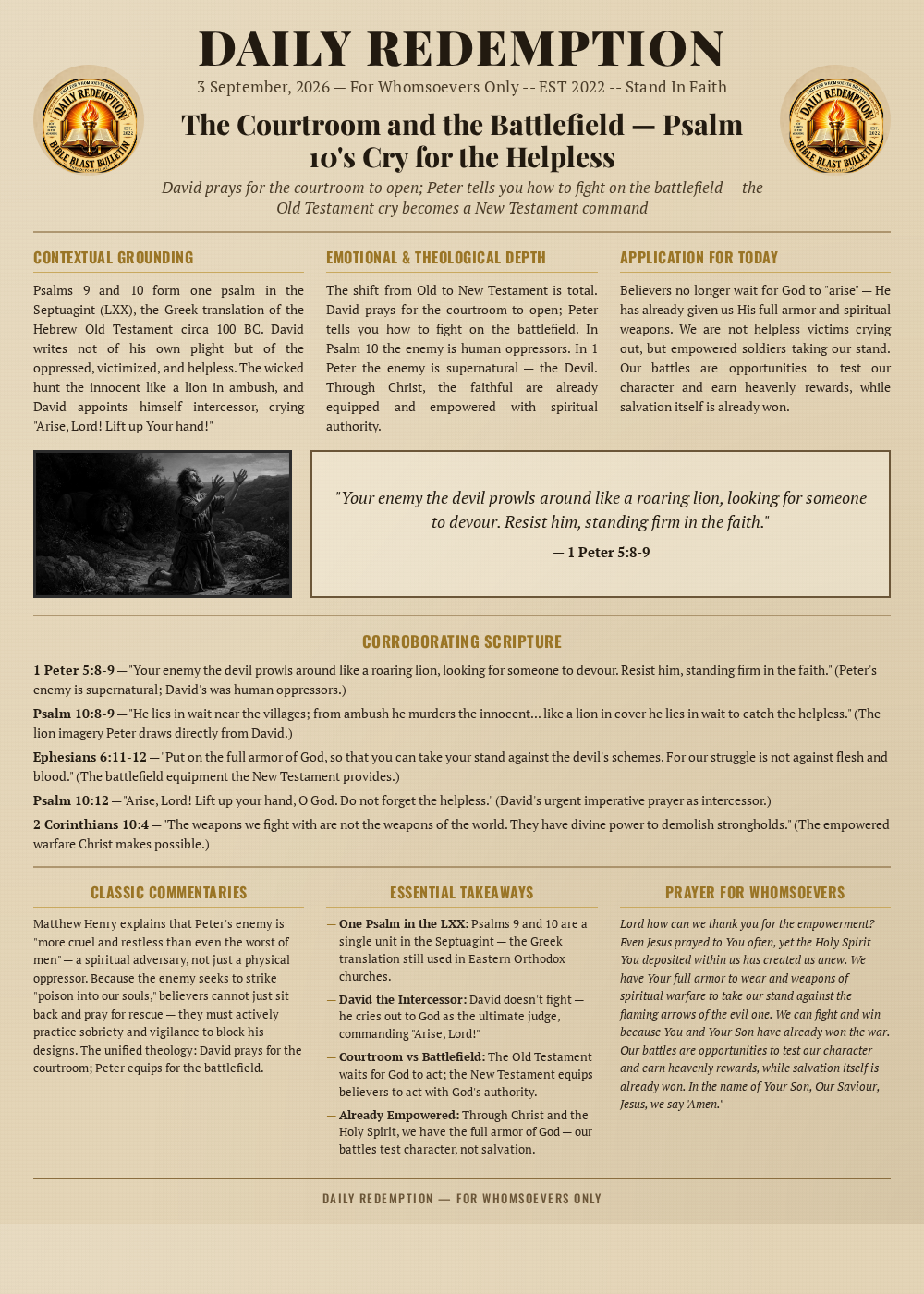
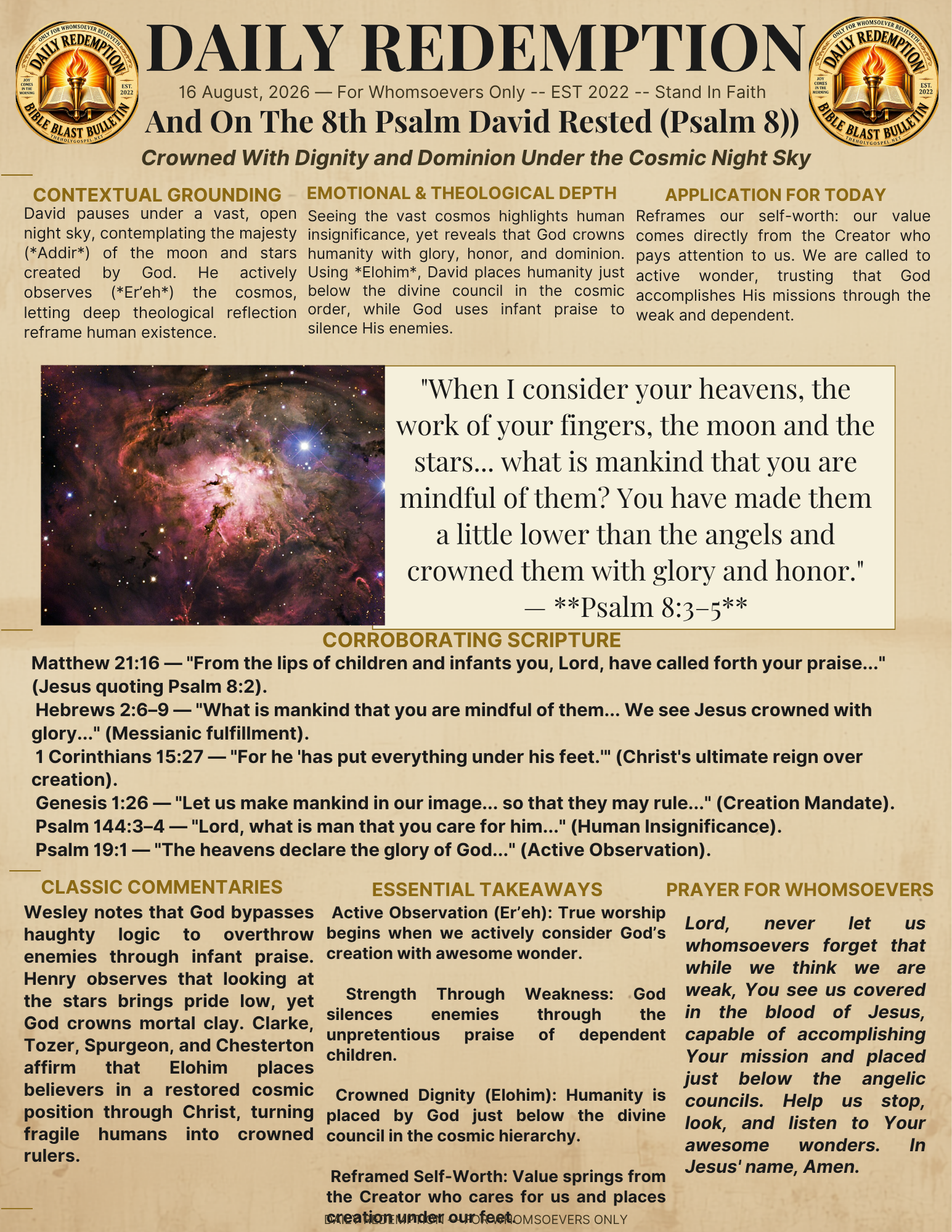
Thankfulness is not merely a polite religious sentiment, but the sacred entry point into God’s holy presence that moves the heart of heaven. As the psalmist proclaims in Psalm 100:4, we enter His gates with thanksgiving and His courts with praise, unlocking divine communion with the Father. When we drench every word, deed, and circumstance in gratitude through the Lord Jesus Christ, His presence saturates our souls like gentle rain upon thirsty ground. For every Whomsoever, choosing a lifestyle of continuous thanksgiving transforms our earthly trials, lifts our spirits in joyful freedom, and leads lost sinners home to the feet of the Savior. Contextual Grounding In ancient Israel’s worship, entering the sanctuary of Yahweh was a structured, sacred journey. Psalm 100 serves as a majestic liturgical Psalm of Thanksgiving (Hebrew Todah), sung by pilgrims as they ascended Mount Zion and approached the sacred temple grounds. The psalmist gives a direct, divine directive: “Enter into his gates with thanksgiving, and into his courts with praise: be thankful unto him, and bless his name” (Psalm 100:4). In the Old Testament tabernacle and temple, the outer gates and inner courts separated the common world from the holy dwelling place of God’s presence. Passing through those gates required an intentional spiritual posture. Gratitude was not an afterthought following an encounter with God; it was the required key that unlocked the gate itself. Without thanksgiving, a worshiper remained outside in the wilderness, distant from the Shekinah glory residing above the mercy seat. The Hebrew concept of thanksgiving (todah) denotes an open-handed confession of God’s sovereign goodness, righteous character, and unshakeable covenant faithfulness. It is an act of public acclaim and sacrificial devotion that acknowledges Yahweh as the Creator, Shepherd, and Redeemer of His people. The psalm reminds us that “he hath made us, and not we ourselves; we are his people, and the sheep of his pasture” (Psalm 100:3). Thus, thanksgiving is rooted in creaturely dependence upon the Creator and covenantal trust in the Good Shepherd. To give thanks is to surrender the delusion of self-sufficiency, recognizing that every breath, every physical healing, and every spiritual blessing flows exclusively from God’s unmerited favor. In the New Testament, this Old Testament temple imagery finds its ultimate Christological fulfillment in Jesus Christ. Jesus is the true Temple and the living Gate through whom we draw near unto God (John 10:9). Through His sacrificial death upon the cross and His glorious resurrection, Christ tore the veil of separation and granted redeemed believers direct access into the Holiest of All. Apostle Paul expands this psalm’s directive into the daily walk of the Church, commanding in Colossians 3:17 that “whatsoever ye do in word or deed, do all in the name of the Lord Jesus, giving thanks to God and the Father by him.” Under the New Covenant, thanksgiving is no longer confined to physical temple courts in Jerusalem; it becomes the continuous spiritual sanctuary where every Whomsoever abides in unbroken fellowship with the Father through the Son. Emotional & Theological Depth On an emotional level, human souls frequently wander in dry, parched wildernesses of anxiety, discontent, and spiritual fatigue. In a world full of noise, deception, and relentless pressure, we easily fixate on what we lack or what troubles us, allowing bitterness to build walls around our hearts. Yet, thankfulness is the divine remedy that saturates the soul like rain on thirsty ground. When you turn your heart toward God in genuine gratitude, His holy presence saturates your life with unshakeable peace, divine provision, and unceasing praise.
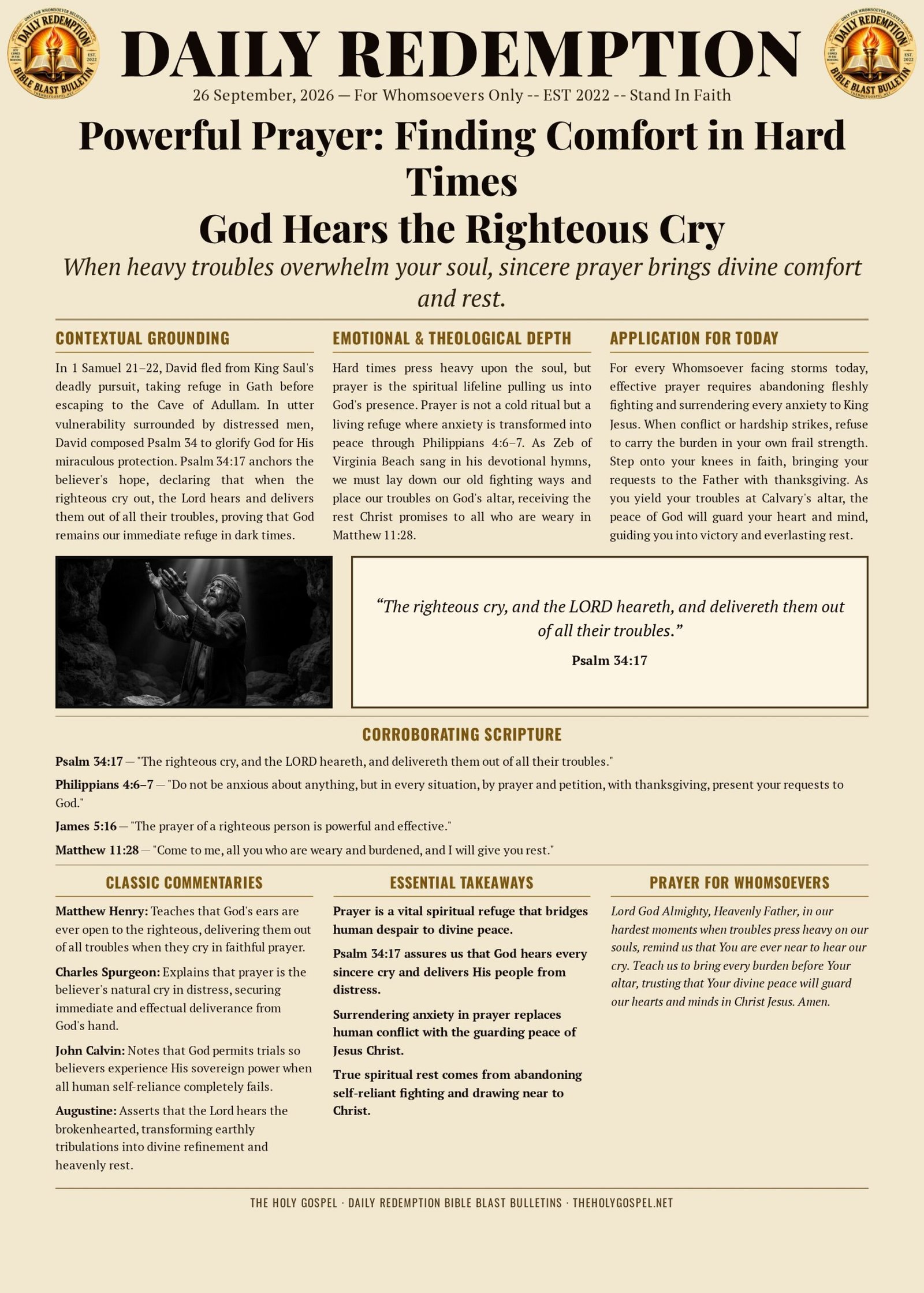
Powerful Prayer: Finding Comfort in Hard Times — God Hears the Righteous Cry
When overwhelming trials and heavy troubles threaten to pull the weary soul beneath the waves of despair, holy prayer becomes our immediate refuge and direct lifeline to the Almighty God. In the furnace of affliction, King David discovered that God does not ignore the helpless cry of His people, but draws near to deliver them out of all their distresses. By bringing every burden, conflict, and anxiety before the divine altar in humble faith, we experience the miraculous peace of Christ that transcends human understanding. For every Whomsoever facing life’s darkest valleys today, sincere prayer shifts our posture from fleshly fighting to divine resting, securing the comforting presence of our heavenly Father. Contextual Grounding In the sacred account of First Samuel chapters 21 and 22, the future king David found himself hunted like a fugitive across the wilderness of Judea by King Saul’s relentless, jealous fury. Forced to flee for his life without food, armor, or allies, David sought temporary refuge in the pagan city of Gath before King Achish (also called Abimelech). Surrounded by mortal enemies who recognized him as Israel’s champion, David stood in extreme peril. In sheer human desperation, he feigned madness—scrabbling on the city gates and letting saliva run down his beard—until Achish drove him away. Escaping to the dark, damp sanctuary of the Cave of Adullam, David did not attribute his survival to his own theatrical cleverness or human resourcefulness; instead, his heart erupted in magnificent worship, yielding the inspired verses of Psalm 34. Psalm 34 is an acrostic psalm of joyful praise, spiritual instruction, and unshakable covenant confidence. Composed in the shadow of imminent death, the psalm serves as an enduring testimony that God’s ears are continually open to the desperate cries of His anointed. In verse 17, David proclaims the central pillar of his deliverance: “The righteous cry, and the LORD heareth, and delivereth them out of all their troubles.” The historical setting of Adullam—where four hundred distressed, indebted, and discontented men gathered around David—transforms this psalm from a private prayer into a congregational anthem of hope for all who are broken in heart. In the divine arrangement of biblical revelation, David’s flight and subsequent song reveal that human extremity is the very backdrop against which divine mercy is most clearly displayed. When earthly securities fail and human wisdom reaches its utter end, prayer bridges the gulf between human weakness and God’s omnipotence. David’s experience at Gath and Adullam demonstrates that the Lord does not despise the weak or the terrified; rather, He hears their broken cries, breaks their chains of fear, and establishes their feet upon the rock of His salvation. Emotional & Theological Depth Hard times press heavy on the soul, but prayer is the spiritual lifeline that pulls us back into God’s comforting presence. Prayer is far more than a routine religious ritual or a formal recitation of words; it is an intimate refuge for the bruised and battered spirit. In the darkest valleys of human suffering, prayer becomes the divine bridge spanning the chasm from despair to hope, from unbearable burden to heavenly rest. Psalm 34:17 reminds us that every tearful cry is heard by the Creator of the universe. Philippians 4:6–7 shows that prayer possesses the divine power to transform paralyzing anxiety into supernatural peace. James 5:16 declares prayer’s immense power—not because of the eloquence of human lips, but because of the omnipotent response of a loving God. And Matthew 11:28 offers eternal rest to the weary, proving that true comfort is found not in escaping our circumstances, but in sweet communion with Jesus Christ.
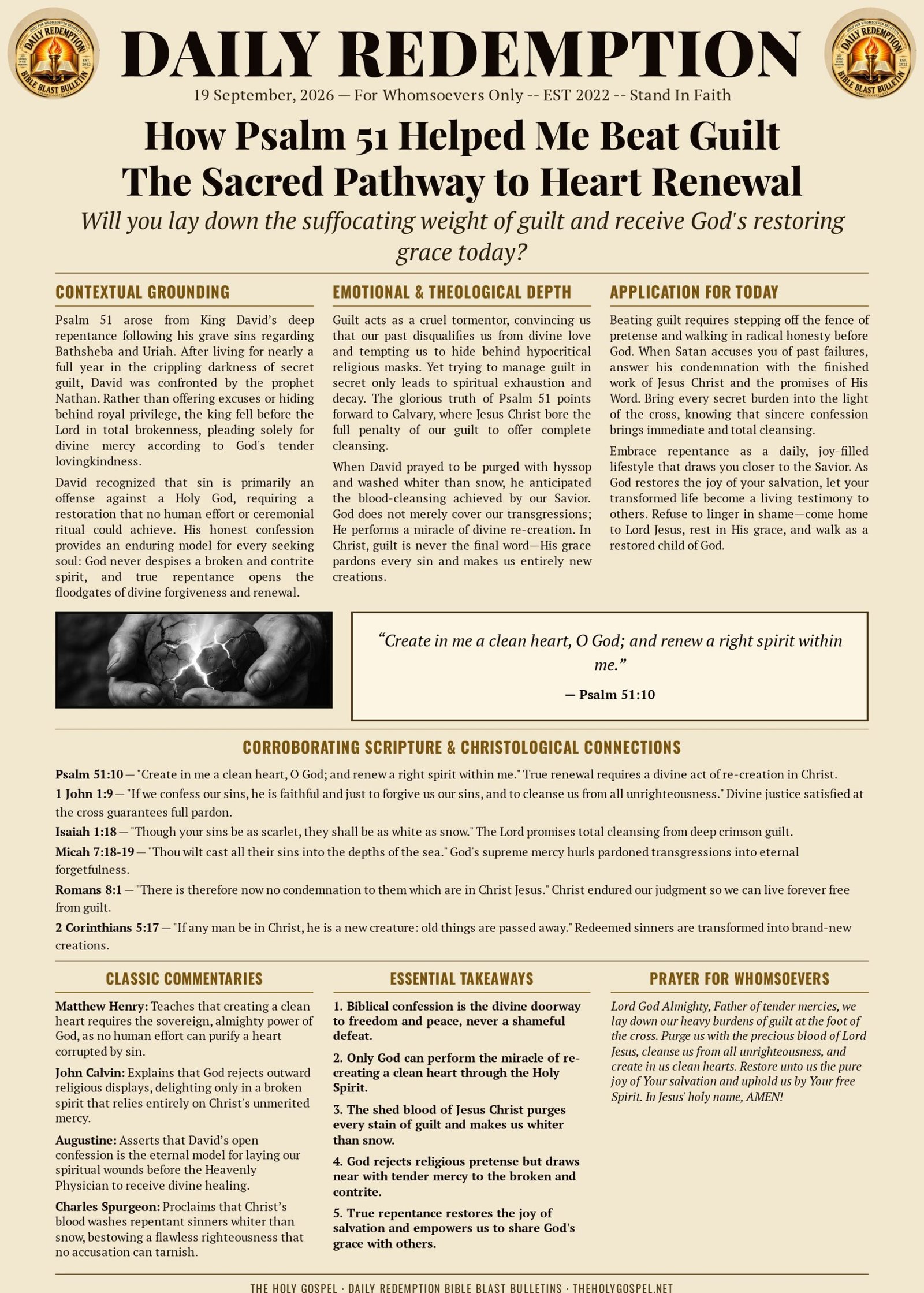
How Psalm 51 Helped Me Beat Guilt — The Sacred Pathway to Heart Renewal
For years, I wrestled with the crushing weight of hidden guilt, trying to patch over my spiritual failures while pretending everything was fine on the surface. But when I turned to Psalm 51, King David’s raw, tear-stained prayer opened my eyes to a revolutionary truth: biblical confession is not a shameful defeat, but the divine doorway to total freedom and restoration. Through genuine repentance, God does not merely cover our transgressions; He washes us whiter than snow and creates a clean heart within us through the precious blood of Jesus Christ. If guilt is suffocating your soul today, stop hiding in the shadows, lay down your self-righteous excuses, and step into the boundless mercy of the Savior who delights in pardoning every Whomsoever who comes home.
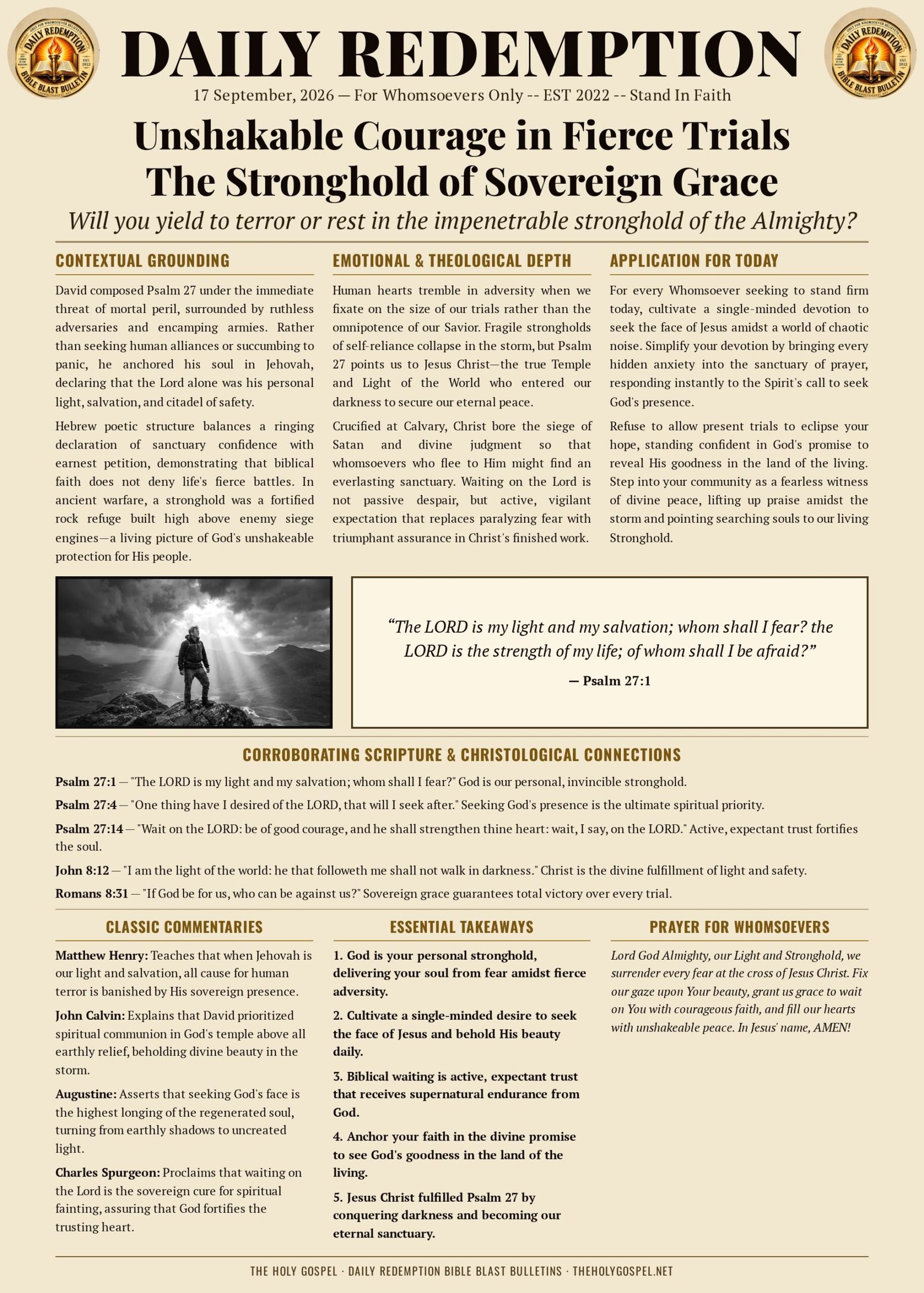
Unshakable Courage in Fierce Trials — The Stronghold of Sovereign Grace
When fierce trials encompass the believer and the shadows of adversity grow dark, human strength inevitably falters—yet the soul anchored in the Almighty stands entirely fearless. Psalm 27 unveils the holy secret of spiritual invincibility: true courage is not the absence of trouble, but the total surrender of the heart to Jesus Christ, who is our light, our salvation, and the impenetrable stronghold of our lives. By fixing our gaze upon the beauty of the Lord and seeking His presence amidst the storm, whomsoevers are empowered to active, expectant trust rather than passive panic. Lay down your anxious striving today, rest in the finished work of Calvary, and wait with unwavering confidence to see the goodness of God in the land of the living.
- Do Not Fear
- Drawing Nearer To God The Father
- Faith
- Faithful God
- Holy Gospel
- Holy Spirit
- Jesus The Comforter
- King David
- LIFE
- Musings On Spiritual Warfare
- Practicing Christian Faith
- Psalms
- Psalms
- Restoration And Renewal
- Salvation
- Spiritual Warfare
- Taking The Devil Down
- The Daily Redemption
- Truth And Integrity
- Understanding Scripture
- VICTORY
- Your Connection To God