What If The Bible Means Something Different Than You Think??? Let’s Start With Gen 2:18
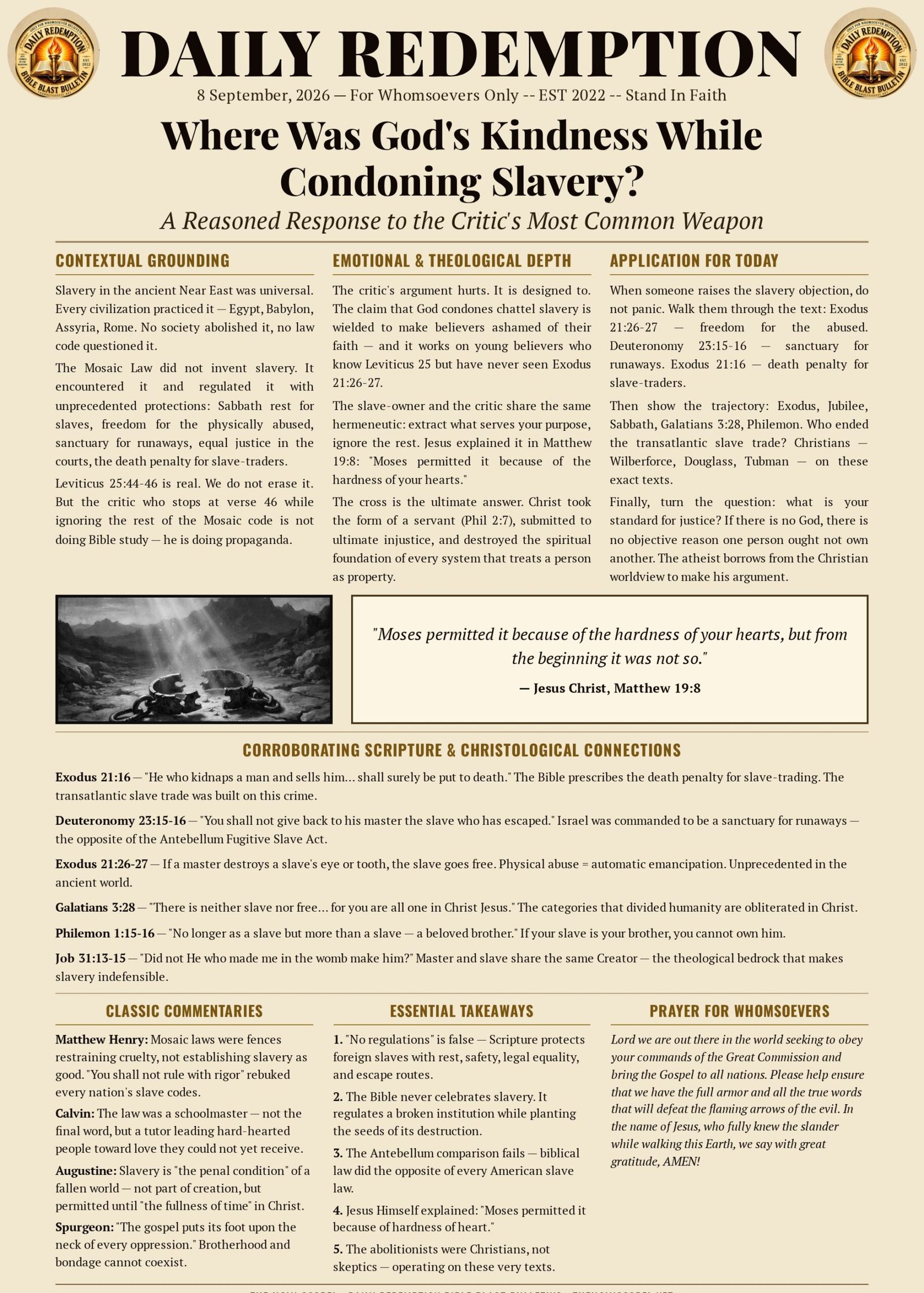
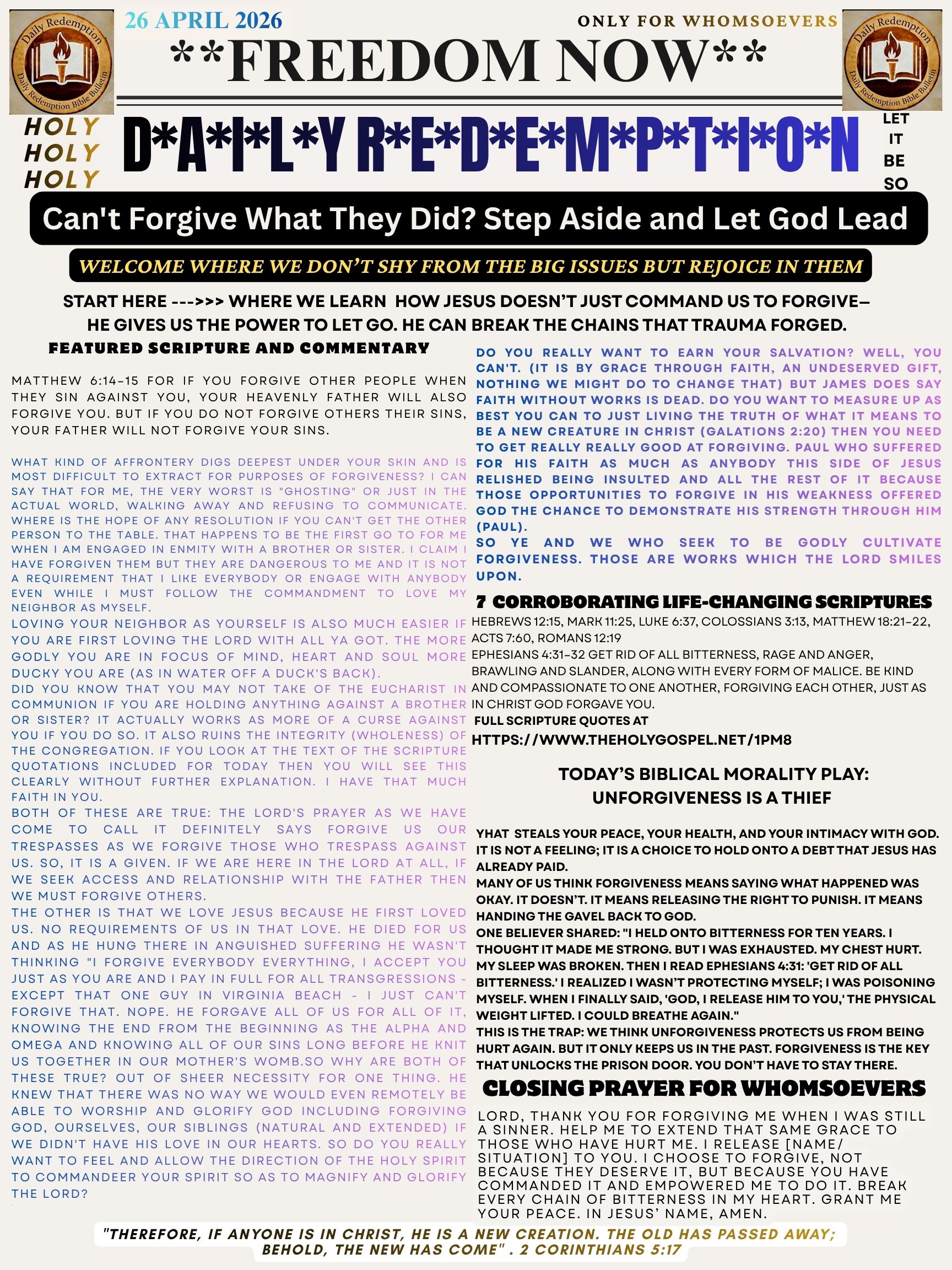
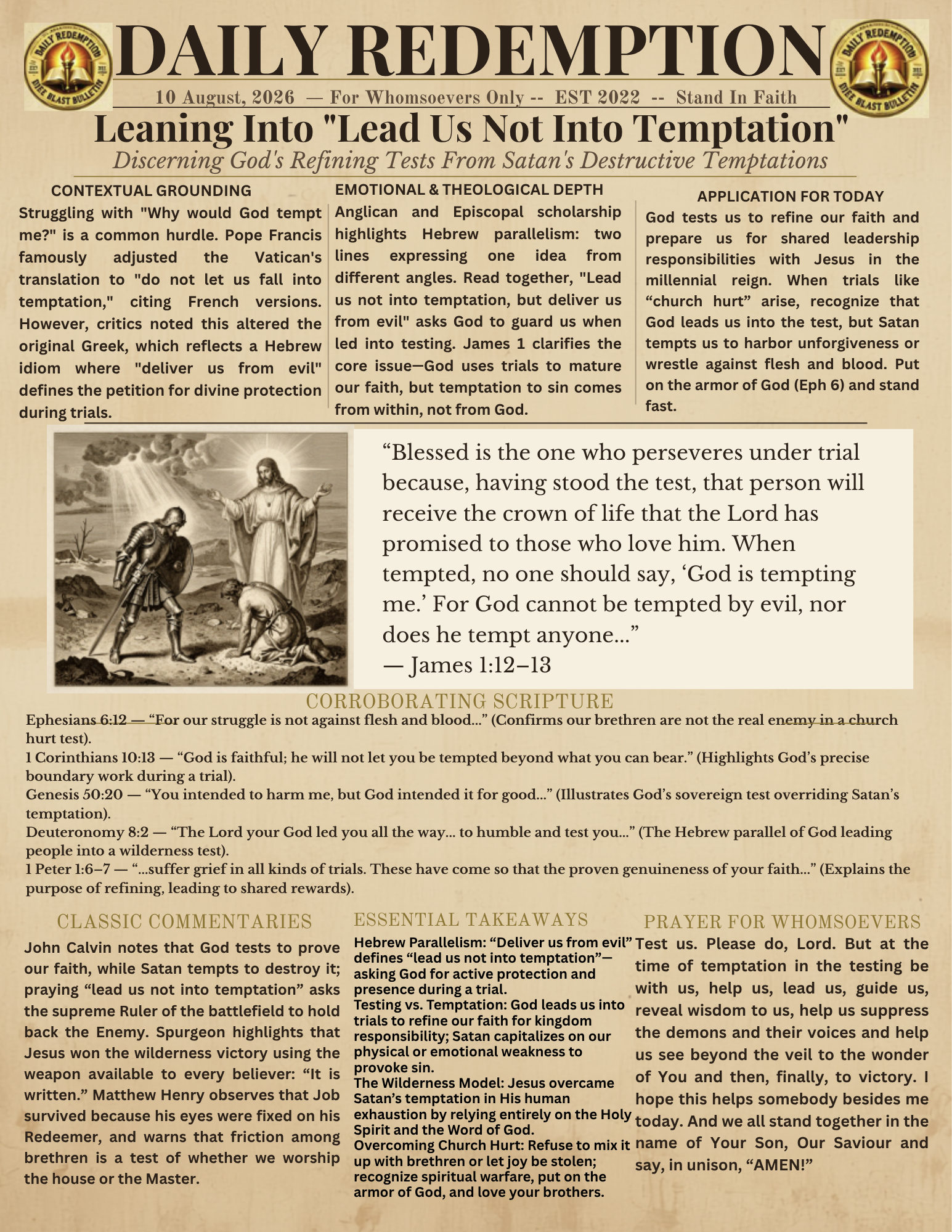
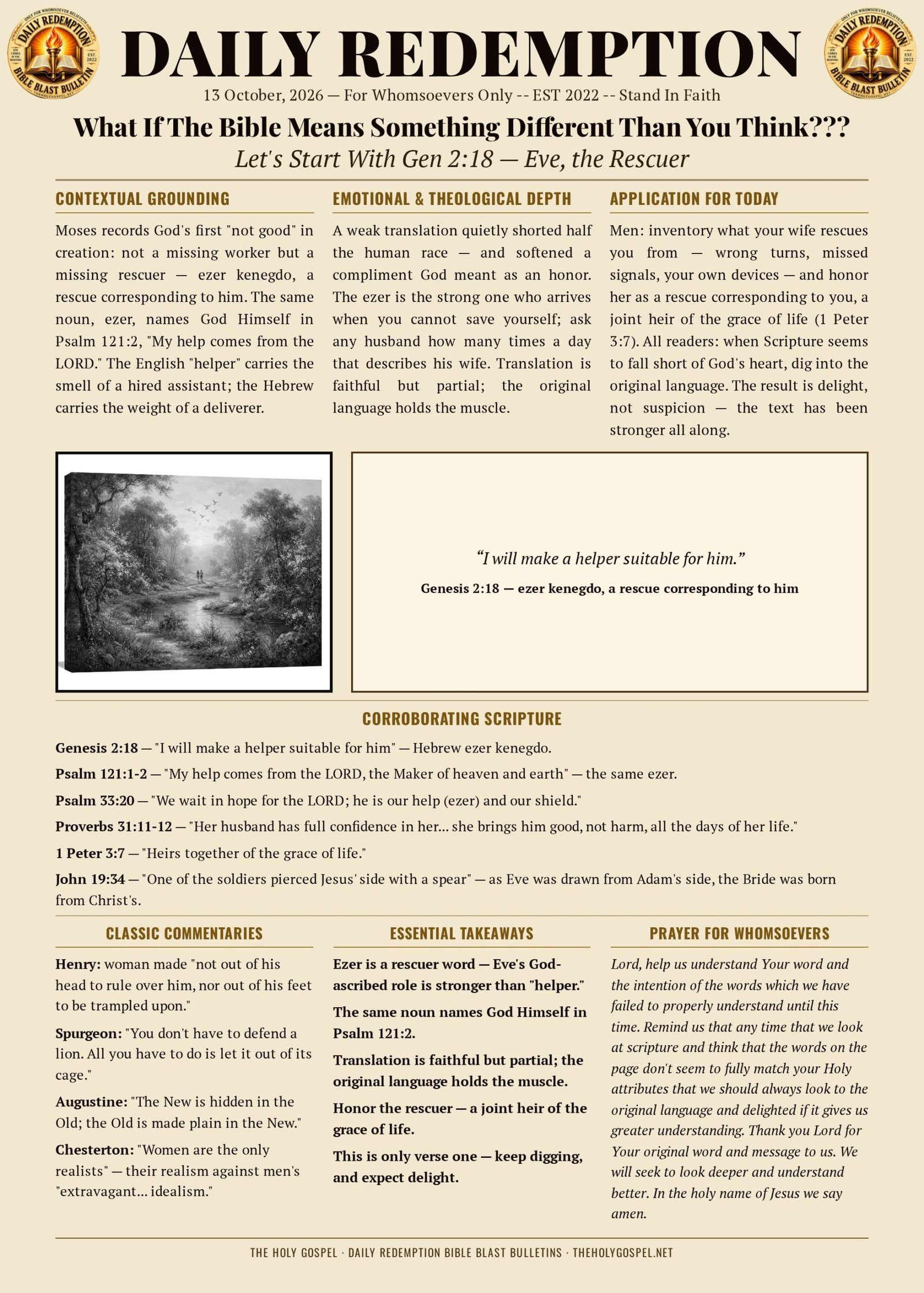
Most of us carry an English Bible and assume the English carries the full weight — but Genesis 2:18 is living proof it doesn’t. The Hebrew ezer kenegdo describes Eve not as an assistant but as a rescue: the same noun that names God Himself in Psalm 121, “My help comes from the LORD.” That one word reframes man-woman dynamics from the ground up — a wife is not a helper hired for chores; she is the rescuer God said man needed, and no translation fee was ever paid to tell us so. When the words on the page seem to fall short of God’s heart, look to the original language — and expect delight, because the text has been stronger all along.
Not in its essence or in it’s entirety but scriptural quotes that you have understood to mean one thing when compared to it’s original language you might discover it stands in a completely different light with a completely different meaning.
Let’s start with Genesis 2:18. Eve has been shorted in the significance of her original role as ascribed by God and written by Moses in the 1st book of the Torah. Here is how it reads in the NIV translation. Others like ESV are almost identical.
“I will make a helper suitable for him” right? Well yes but not nearly as strong as the men translated it to mean. Hebrew ezer kenegdo. Ezer is a strong- rescuer word — the same noun describes God Himself in Psalm 121:2 (“my help comes from the LORD”). Eve is not an assistant, not a secretary 🙂 – she is a rescue corresponding to him.
How much does this clarify man-woman dynamics. Men I ask you – is your wife someone who just cooks for you and just does your laundry? Does she just keep the house clean? do chores? keeps the book for the household? looks after the kids? All of that is wonderful especially if she provides a second income (or the primary one). But does that embody a rescuer? OK don’t get me wrong she is not equal to Jesus in terms of salvation even if the same term used to describe her role in Gen 2:18 is used to describe God in Psalm 121:2. Even so you don’t look to the hills where your wives come from right? However, how many times per day does she save your bacon from taking the wrong turn? Even the GPS voice is female right? Or save you from all the things that women do better than we do which would get messed up if left to your own devices? Any gents feeling at least a tiny bit convicted here? Give that woman a promotion, a raise and a bonus!
A rescuer is much more significant in your worldly daily existence than just a helper.
Classic Commentaries Corner
Matthew Henry, in his Genesis commentary, read the making of Eve as the whole architecture of marriage in a single operation: the woman was made “not out of his head to rule over him, nor out of his feet to be trampled upon by him, but out of his side to be equal with him, under his arm to be protected, and near his heart to be beloved.” Henry saw what the English “helper” hides — corresponding, equal, protected, beloved. The rib was never a hierarchy; it was a portrait.
Charles Spurgeon, when accused of defending Scripture too strenuously, answered with the lion: “The Word of God is like a lion. You don’t have to defend a lion. All you have to do is let it out of its cage.” That is exactly this bulletin’s method — the Hebrew does not need rescuing, only releasing. Open the cage of the original language and ezer does the roaring for itself: God named Eve with the same word He answers to.
Augustine taught the church to read depth on purpose: “The New Testament is hidden in the Old; the Old Testament is made plain in the New.” Genesis 2:18 is a case in point — the ezer of Eden resurfaces as the ezer of the psalms, and the wife’s rescue role resolves into the church, the Bride drawn from the wounded side of the second Adam. Scripture’s surface is true; Scripture’s depths are richer still.
G.K. Chesterton, that apostle of paradox, agrees with Moses in his own English dress: “Women are the only realists; their whole object in life is to pit their realism against the extravagant, excessive, and occasionally drunken idealism of men.” That is the ezer kenegdo translated — the corresponding one who sees the turn you are about to miss and says so. A man’s idealism needs a realist corresponding to it, and that is not his weakness but his rescue. Give that woman a promotion, a raise and a bonus.
Corroborating Scripture & Christological Connections
Genesis 2:18 — “I will make a helper suitable for him.” Hebrew ezer kenegdo: a rescue corresponding to him — the first “not good” in creation answered not with a servant but a savior-of-sorts.
Psalm 121:1-2 — “My help comes from the LORD, the Maker of heaven and earth.” The same ezer — the word that names Eve names God. The comparison is not sacrilege; it is the compliment God chose on purpose.
Psalm 33:20 — “We wait in hope for the LORD; he is our help and our shield.” The ezer is a strong-and-shielded word — deliverance language, not domestic language.
Proverbs 31:11-12 — “Her husband has full confidence in her and lacks nothing of value. She brings him good, not harm, all the days of her life.” The rescued husband’s testimony: he lacks nothing because she keeps saving him.
1 Peter 3:7 — “Heirs together of the grace of life… so that nothing will hinder your prayers.” The corresponding one is a joint heir — dishonor her and heaven takes note of the prayer line going dead.
John 19:34 & Ephesians 5:31-32 — “One of the soldiers pierced Jesus’ side… ‘For this reason a man will leave his father and mother and be united to his wife, and the two will become one flesh’ — This is a profound mystery: I am talking about Christ and the church.” As Eve was drawn out of Adam’s side while he slept, the Bride was born from the pierced side of the second Adam. The ezer thread runs from Eden’s garden to Calvary’s hill — God has been writing rescue corresponding to Him all along.
Essential Takeaways
- Ezer Is a Rescuer Word: Eve’s God-ascribed role is stronger than “helper” — a rescue corresponding to him, named with the same noun God answers to in Psalm 121.
- Translation Is Faithful but Partial: When the English seems to undersell God’s heart, the Hebrew almost always holds the muscle — dig, and be delighted.
- Honor the Rescuer: She is not a chore list, a cook, or a second income — she is a joint heir of the grace of life, and heaven audits how she is treated.
- The Thread Runs to Calvary: Eve from Adam’s side, the Bride from Christ’s — the helper motif was always a foreshadow of the church and her Lord.
- This Is Only Verse One: A series begins today — more words ahead that mean something different than you think.
Prayer For Whomsoevers
Lord, help us understand Your word and the intention of the words which we have failed to properly understand until this time. Remind us that any time that we look at scripture and think that the words on the page don’t seem to fully match your Holy attributes that we should always look to the original language and delighted if it gives us greater understanding. Thank you Lord for Your original word and message to us. We will seek to look deeper and understand better. In the holy name of Jesus we say amen.