While We Were Still Enemies: What Romans 5 Says Your Rescue Actually Cost
While we were still enemies, Christ died for us while we were still sinners, and sinners are enemies of God. So the teaching about loving your enemies gets answered in us. He loved his enemies first, and we were them. Suffering produces perseverance, perseverance produces character, character produces hope, and hope does not put us to shame. Grace is free, growth is not.
Greetings! Hope you’re having a great day — and let’s see if we can put just a little bit more God into it with the fifth chapter of Romans, where Paul tells you what you were when he came for you, and what it cost him to do it.
Contextual Grounding
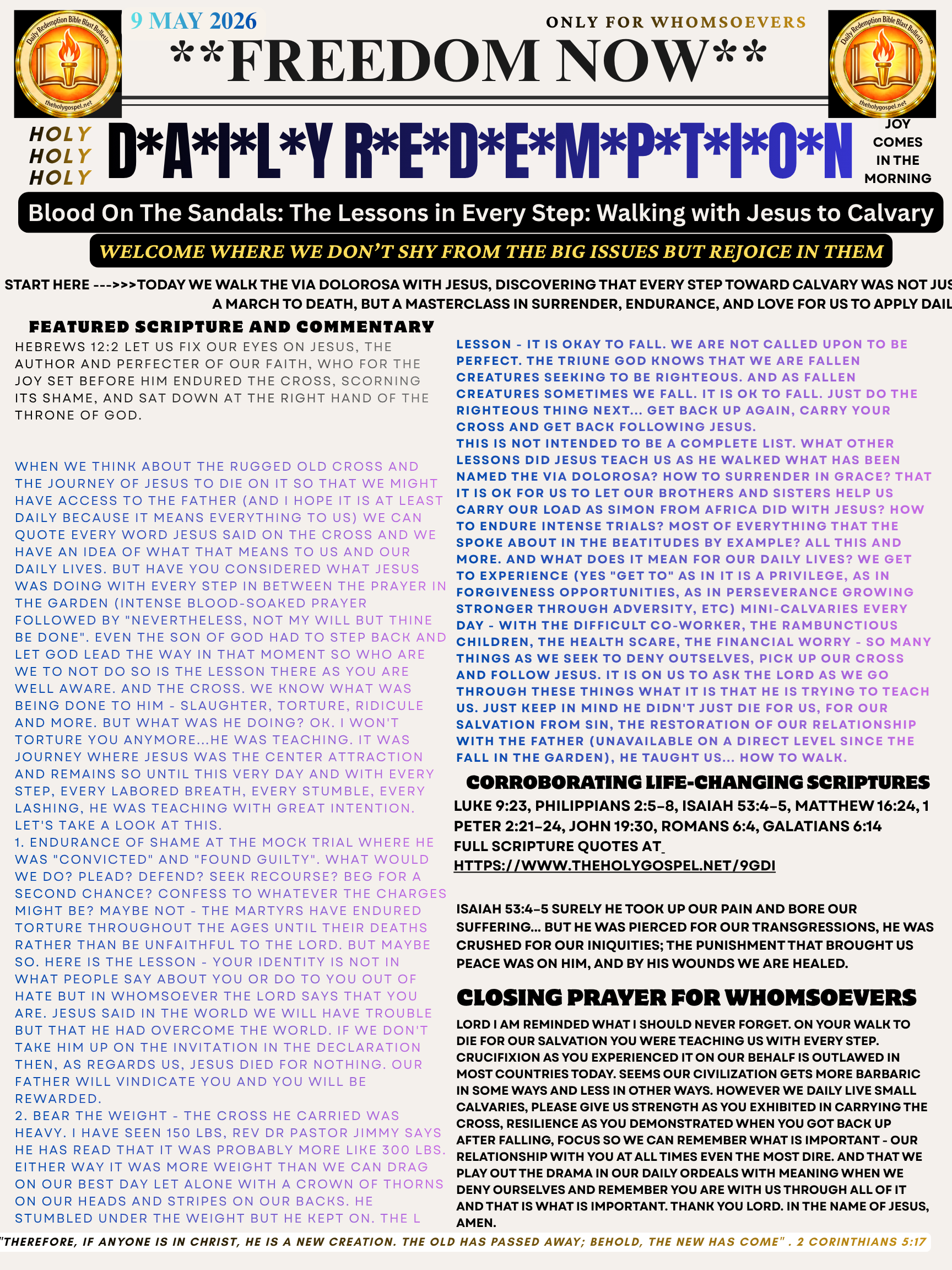
Seven, peace with God and access by faith. Being justified through faith means we stand in grace, we have peace with God, and boast in the hope of his glory rather than our own record. Eight, Paul who suffered more than any biblical figure, he talks about in great detail in one of the sections in Acts, you know, all the shipwrecks and whippings and chainings and everything. Paul who suffered more than any biblical figure outside of Jesus was no stranger to suffering, talks of suffering, perseverance, character, and hope. This is about the fullest answer that we’re likely to get this side of heaven on why God allows suffering. Paul says that suffering produces perseverance, perseverance produces character, character produces hope, and hope does not put us to shame. If you’re suffering, or when and if you’re suffering, try to move through it from the natural perspective on it to the one that Paul describes here. Let it build your character, let it build your closeness to God, know that in our weakness God demonstrates his strength.
Emotional & Theological Depth
Well, 11, while we were still enemies, Christ died for us while we were still sinners, and sinners are enemies of God. They do the exact opposite of what God tells us to do. We did. So the teaching about loving your enemies gets answered in us. He loved his enemies first, and we were them. Always have that in your pocket. If a devout doubter or deceiver asks, when did Jesus live up to his own words and love his own enemies? Of course, there was his asking the Father for forgiveness for his tormentors who knew not what they were doing, but also, suck it up now, in us, for while we were still sinners, enemies of God, he came for our salvation. Just realize that if anybody ever decides like they’re leaning towards backsliding and so forth, they are going towards being an enemy of God. Make sure that’s on the table when you’re considering such a thing, and God forbid that your faith should ever waver that much. God’s okay with doubt. God is totally okay with doubt. He’s okay with pretty much anything except an untrue heart, and not crazy about backsliding.
Application For Today
Okay, number 12. If God reconciled us as enemies through the death of his Son, how much more does he save us by his life? The hard part is already behind us. More on this later. Grace is free, growth is not. We don’t work for our salvation, but there is real work in drawing closer to God. This is number 10. The equity of the work is in faith, prayer, belief. Paul never confuses the two, and neither should we.
Corroborating Scripture & Christological Connections
Romans 5:1–2 — “Therefore, since we have been justified through faith, we have peace with God through our Lord Jesus Christ, through whom we have gained access by faith into this grace in which we now stand.” Standing, not striving.
Romans 5:3–5 — “We also glory in our sufferings, because we know that suffering produces perseverance; perseverance, character; and character, hope. And hope does not put us to shame.” The chain, in Paul’s own order.
Romans 5:6 — “For while we were still weak, at the right time Christ died for the ungodly.” Weak, not worthy.
Romans 5:8 — “But God shows his love for us in that while we were still sinners, Christ died for us.” The verse that answers the skeptic.
Romans 5:9–10 — “Since we have now been justified by his blood, how much more shall we be saved from God’s wrath through him. For if while we were enemies we were reconciled to God by the death of his Son, much more, now that we are reconciled, shall we be saved by his life.” How much more, twice, in two verses.
Classic Commentaries Corner
Charles Wesley: “Amazing love! how can it be, that Thou, my God, shouldst die for me?” He wrote it about this verse, and he never got over it.
Augustine: “Give what you command, and command what you will.” The only honest prayer of a man who wants to grow and cannot do it alone.
C. S. Lewis: “We are half-hearted creatures, fooling about with drink and sex and ambition when infinite joy is offered us.” Grace is free. Refusing to grow is how a free thing stays small.
John Newton: “Through many dangers, toils and snares, I have already come; ’tis grace hath brought me safe thus far, and grace will lead me home.” A man who knew the chain Paul describes wrote the verse we still sing about it.
Essential Takeaways
Suffering Has a Shape: It is not random. Paul says it is building something, and the last link is hope.
He Loved Enemies First: When they ask when Jesus practiced His own sermon, point at the cross and then point at yourself.
How Much More: The hard part is done. If He reconciled a hostile man, He is not going to drop a reconciled one.
Free, Not Cheap: Salvation costs you nothing. Growth costs you everything, and it is the only place the debt of love gets paid.
Daily Prayer Excerpt From The Great Litany from the Anglican Book of Common Prayer
In all times of our tribulation; in all times of our prosperity; in the hour of death, and in the day of judgment, — Good Lord, deliver us. O Christ, hear us. Lord, have mercy upon us. Christ, have mercy upon us. — Lord, have mercy upon us.
Today’s Lesson 0.0% AI-Generated