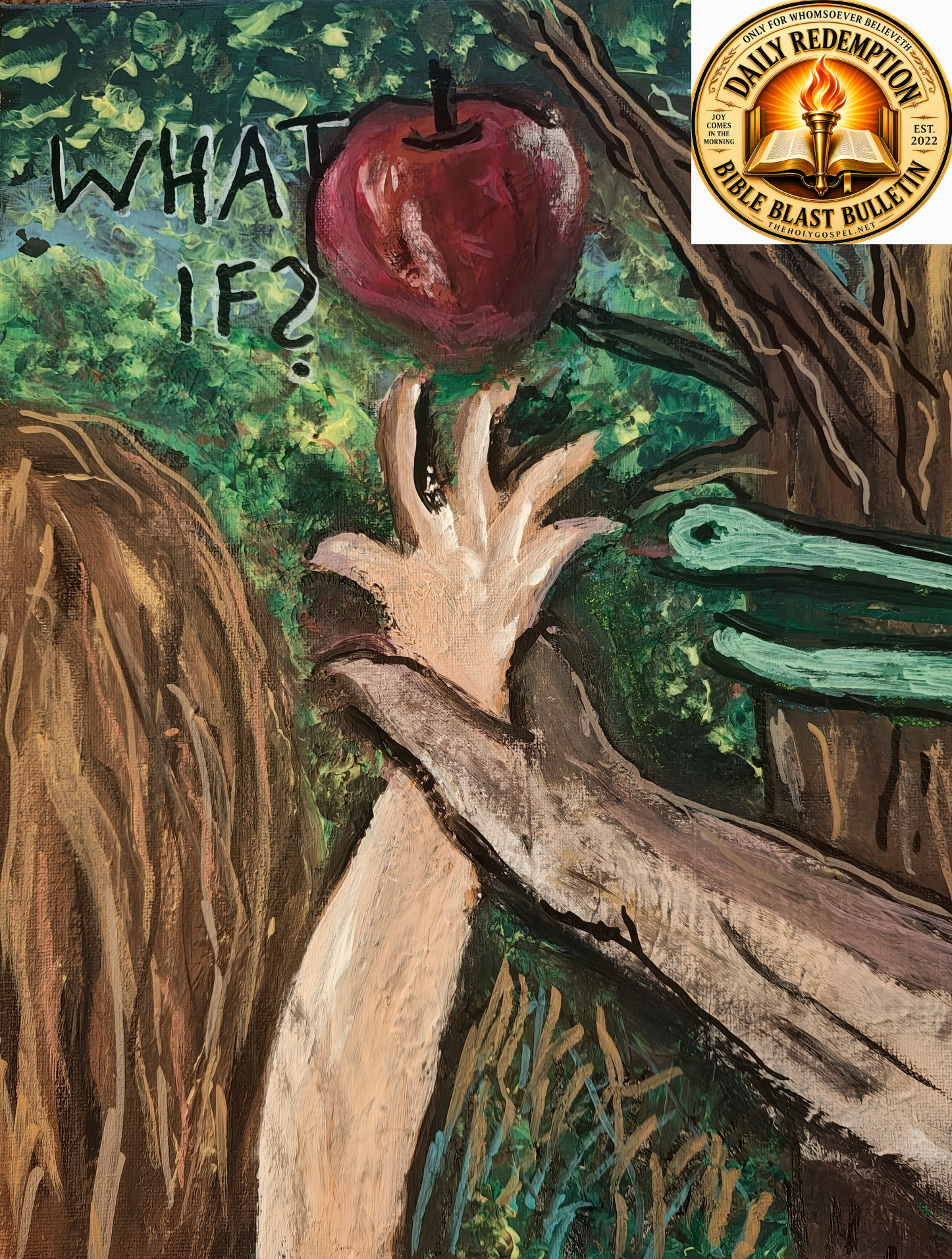
When one is reading the Bible they want to know God better. What if they walk away with the wrong understanding or in confusion and what if it is not their fault unless they can be blamed for never studying Hebrew? Linguistic shifts from Hebrew to Greek (Septuagint), then to Latin (Vulgate), and finally to English and myriad other languages have caused some of the most enduring theological and cultural misconceptions in history.
What if “helper” as used to describe the role of Eve towards Adam meant something else entirely?
What if Cain was not cursed but blessed with protection and we have all misunderstood because of translation errors?
What if a lot of things…
I advise you that this is a VERY deep rabbit hole. You have been warned. 🙂
Let’s start with just a few that will be more enjoyable than some others.
One more word of advisement – these translations are not written in stone either. There is 1000s of years of
often tumultuous discussion on some of these and many more. It also opens a door for the nefarious to confuse people about the Bible.
Here is where you can find peace. It is where I am finding it. Oddly it is from a Roman Catholic but even a broken clock is right
twice per day.
When we let go of the need for human answers to perfectly align with our Western legal logic, the riddles themselves become deeply satisfying. They remind us that the Creator of the universe is far larger than our dictionaries, our translation errors, or our theological debates.
Qaran (קָרַן) (not Quran)
• Original Meaning: To shine or emit rays of light .
• Mistranslation: St. Jerome translated this in the Latin Vulgate as cornuta—meaning “horned” .
• Result: Centuries of art depicting Moses with physical horns, leading to historically damaging antisemitic tropes .
Chata’ah (חַטָּאָה)
• Original Meaning: To miss the mark (as an archer missing a target) or to make a mistake .
• Mistranslation: Translated broadly to English as “sin” (which carries heavy connotations of moral depravity and rule-breaking) .
• Result: The belief that every mistake or shortcoming is an intentional, punishable moral transgression .
Hesed (חֶסֶד)
• Original Meaning: Unfailing love, loyalty, and covenantal devotion.
• Mistranslation: Usually simplified to “mercy” or “lovingkindness.”
• Result: The misconception that God’s Hesed is passive forgiveness, rather than an active, fierce, and binding promise of loyalty.
Ezer (עֵזֶר) (ladies you might want to have the Kleenex handy for this one)
• Original Meaning: A strength, rescuer, or a lifesaver (often used to describe God). (Used in Gen 2 for “Eve” but never after for her)
• Mistranslation: Translated into English as “helper” (historically interpreted to mean an assistant or subordinate).
• Result: The common but erroneous modern belief that women were created merely as secondary assistants to men.
•’Owth (אוֹת)Original Meaning: A sign, pledge, token, or beacon of a promise.
• Mistranslation: Translated into Latin as a physical brand and into English as a “mark” of shame.
• Result: The prevalent modern belief that God physically branded Cain with an permanent curse, when in reality, the ‘owth was a divine guarantee of absolute protection to ensure no one would kill him.