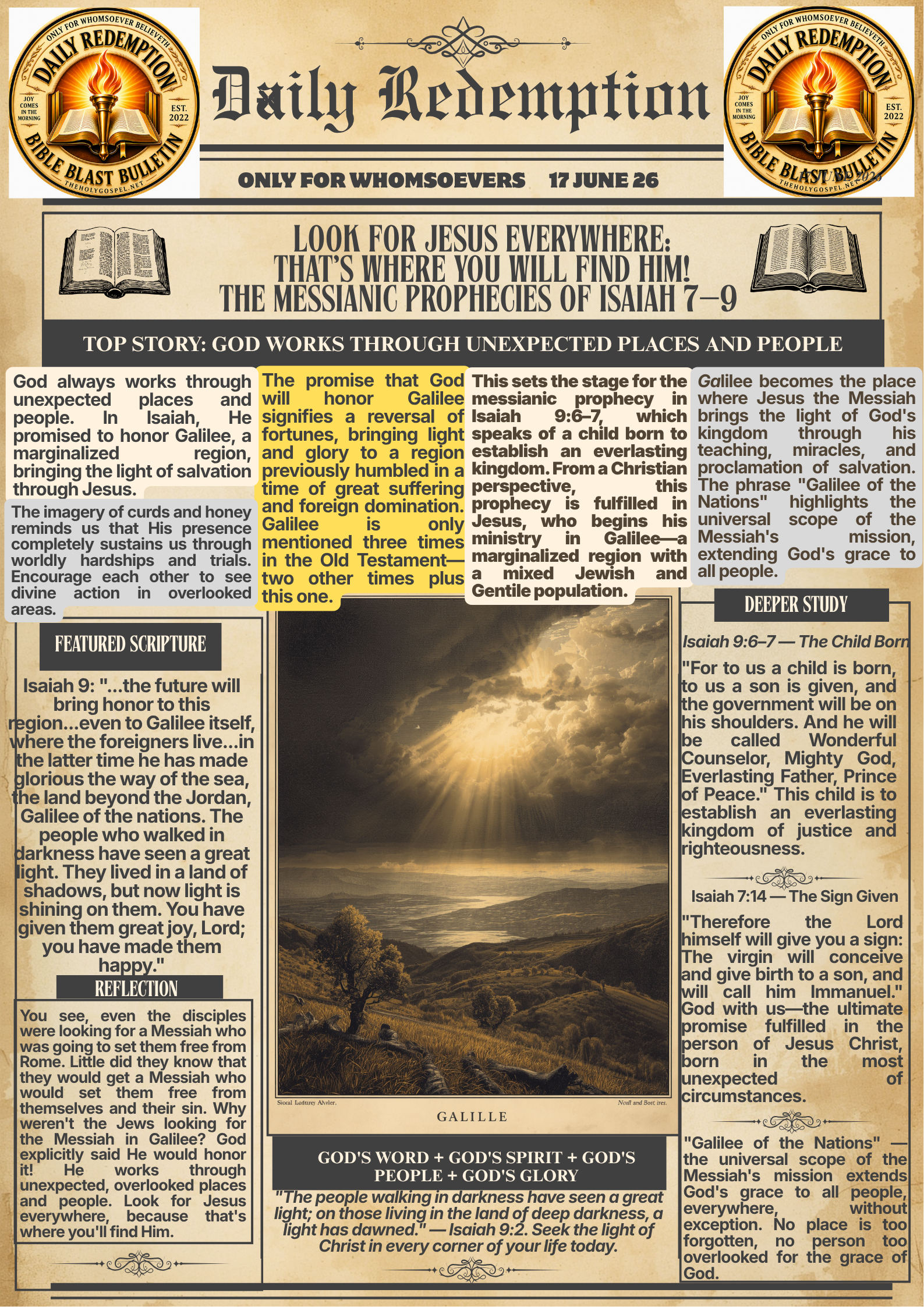
*Isaiah 9:1–2 Nevertheless the dimness shall not be such as was in her vexation, when at the first he lightly afflicted the land of Zebulun and the land of Naphtali, and afterward did more grievously afflict her by the way of the sea, beyond Jordan, in Galilee of the nations. The people that walked in darkness have seen a great light: they that dwell in the land of the shadow of death, upon them hath the light shined.*
*Isaiah 9:6–7 For unto us a child is born, unto us a son is given: and the government shall be upon his shoulder: and his name shall be called Wonderful, Counsellor, The mighty God, The everlasting Father, The Prince of Peace. Of the increase of his government and peace there shall be no end…*
“Here now, you House of David, is it not enough to try the patience of humans, will you try the patience of my God also? Therefore the Lord himself will give you a sign, the virgin will conceive and give birth to a son, and will call him Emmanuel, which is God with us.”
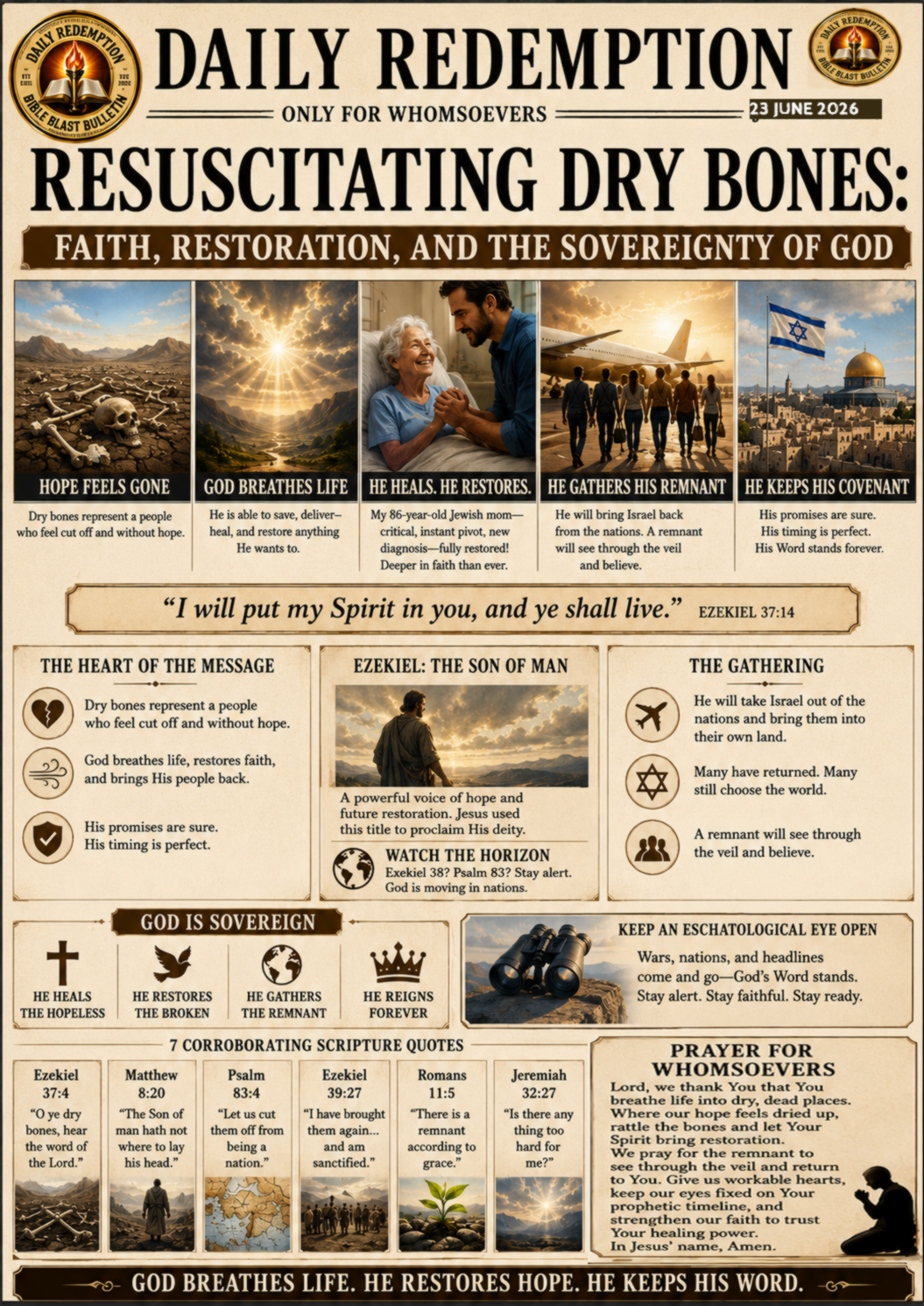
You can hardly put two words together from the Old Testament and not find something messianic about them—if that’s what you’re looking for, you’ll find it. Now, Isaiah 7 through 9, though, you don’t have to try very hard, it’s right there. It’s amongst the most messianic sections of the Old Testament, and that’s what I want to talk about. There’s a lot going on in terms of Israel today, and back in those times, and there’s nothing new under the sun.
There’s this mention of curds and honey, having to do with the time of when the Messiah would be walking the earth. It talks about curds and honey at the time of the child, believed by Christians to be the Messiah, would be in a time of scarcity or desolation where normal agriculture is disrupted and people rely on basic nomadic sustenance. For Christians, this passage points to Jesus as the Emmanuel, God with us, born in humble circumstances. The diet of curds and honey signifies his participation in human suffering and simplicity. This is something I’ve been thinking about an awful lot lately, to be honest with you. Two months out from my acute pancreatitis, which I promise one of these days I’ll stop talking about—but it was a huge, pivotal, transformational time for me in my faith.
The reason why I bring it up is the diet of curds and honey signifies his participation in human suffering and simplicity. Yes, that’s right. We are so unbelievably, amazingly, incredibly, awesomely blessed that we have a God who has suffered as we suffer, and even more so. Most people will never quite suffer the excruciating pain and everything else about being strung up on the cross or nailed up. Our God suffered just as we suffered, except he suffered for us and to set us free. Our suffering doesn’t set anybody free, except for maybe us, if we learn what the lessons are of that suffering.
### **Finding Contentment in Challenging Circumstances**
His participation in human suffering and simplicity hints at divine provision in adversity. The phrase, “when he knows how to refuse the evil and choose the good,” underscores the Messiah’s moral discernment and sinless nature, fulfilling God’s plan for redemption. It aligns to the broader messianic hope in Isaiah of a Savior who brings spiritual abundance despite worldly hardship. Exactly. So the imagery of curds and honey reminds us that God’s presence sustains us through trials—did me, and always does. It calls believers to trust in divine provision and discernment in a world often marked by moral confusion or scarcity. Practically, it encourages humility, reliance on God’s simple gifts, and the pursuit of righteousness, choosing good over evil in daily decisions. This resonates in modern life as a call to find contentment and purpose in faith, even when circumstances are challenging. And there’s a lot of people in our church that have had some challenging circumstances lately, to say the least. But we can still find peace, love, and joy in Jesus and contentment.
### **Why Weren’t They Looking at Galilee?**
Now there’s this very fascinating thing. You know, the Jewish people of the Old Testament and of today are always looking for a sign. How about this: Why weren’t they looking at Galilee? Why didn’t they have their eyes peeled that the Messiah might come and might arrive in Galilee? Because in Isaiah 7 through 9, God says that he will honor Galilee. What did they think that he meant? The promise that God will honor Galilee signifies a reversal of fortunes, bringing light and glory to a region previously humbled in a time of great suffering and foreign domination. Galilee is only mentioned three times in the Old Testament—two other times plus this one. This sets the stage for the messianic prophecy in Isaiah 9:6–7, which speaks of a child born to establish an everlasting kingdom.
From a Christian perspective, this prophecy is fulfilled in Jesus, who begins his ministry in Galilee. Galilee is a marginalized region with a mixed Jewish and Gentile population, and it becomes the place where Jesus the Messiah brings the light of God’s kingdom through his teaching, miracles, and proclamation of salvation. The phrase, “Galilee of the Nations,” highlights the universal scope of the Messiah’s mission, extending God’s grace to all people. You see, even the disciples, they were looking for a Messiah who was going to set them free from Rome. Little did they know that they would get a Messiah that would set them free from themselves and their sin.
### **God’s Pattern of Uplifting the Lowly**
Meaning for today: The unexpected honoring of Galilee speaks to God’s pattern of uplifting the lowly and working through unexpected places and people. How often have we seen that? How often do we see that now? How often do we see that in our own lives when God is using us for something and we’re like, “You sure that I’m the one that you want?” Yeah, God is sure. It is a reminder that God’s transformative work often begins in overlooked or broken areas of life, amen? Whether personalized struggles, marginalized communities, or humble circumstances, it encourages hope, inclusivity, and active faith, inspiring us to shine as light in our own contexts—this little light of mine, sharing God’s love and justice wherever we are.
They should have had their eyes peeled for the Messiah just from this one reference alone, because God would honor Galilee. Well, something was going to happen there—Isaiah told them, and then he shows up and they still don’t figure it out, and still haven’t, most of them, like 99%. God often chooses seemingly insignificant places for his redemptive work, encouraging believers to see potential for divine action. Do this. Do this.
Somebody recently in the church said that they appreciate me for my ability to see God in everything. Well, it’s really just because at this point in my life, that’s my life. But it should be the most important thing in everybody’s life, and as believers, we should encourage each other to see potential for divine action in unexpected areas of life. That means so much, and it means something to me, and it might mean something different to you. Your life is different from my life; they just overlap in certain areas.
So, God said that he would honor Galilee, and I think that that’s quite clear, abundantly clear, to the whole world. As always, he meant exactly what he said. Galilee of the nations. Anyway, go ahead and read 7 through 9 yourself of Isaiah—not so much to find out what was going on in Israel, what travails and troubles that they were having, you can find that in many places—but for the messianic significance. And look for Jesus everywhere, because that’s where you’ll find him. That’s all I got for you. See you soon. Love you.
**PRAYER FOR WHOMSOEVERS**
Lord, open my eyes to see Your potential for divine action in the unexpected, overlooked, and broken areas of my life. Thank You for being a God who participates in our human suffering and sustains us through every trial with Your simple, perfect gifts. Give me moral discernment daily to refuse the evil and choose the good. Help me to shine Your light right where I am, trusting that You mean exactly what You say. In Jesus’ name, Amen.