Psalm 5 (For the director of music. For pipes. A psalm of David.)
1 Listen to my words, Lord, consider my lament.
2 Hear my cry for help, my King and my God, for to you I pray.
3 In the morning, Lord, you hear my voice; in the morning I lay my requests before you and wait expectantly.
4 For you are not a God who is pleased with wickedness; with you, evil people are not welcome.
5 The arrogant cannot stand in your presence. You hate all who do wrong;
6 you destroy those who tell lies. The bloodthirsty and deceitful you, Lord, detest.
7 But I, by your great love, can come into your house; in reverence I bow down toward your holy temple.
8 Lead me, Lord, in your righteousness because of my enemies—make your way straight before me.
9 Not a word from their mouth can be trusted; their heart is filled with malice. Their throat is an open grave; with their tongues they tell lies.
10 Declare them guilty, O God! Let their intrigues be their downfall. Banish them for their many sins, for they have rebelled against you.
11 But let all who take refuge in you be glad; let them ever sing for joy. Spread your protection over them, that those who love your name may rejoice in you.
12 Surely, Lord, you bless the righteous; you surround them with your favor as with a shield.
——————————
## II. HISTORICAL-REDEMPTIVE ANALYSIS
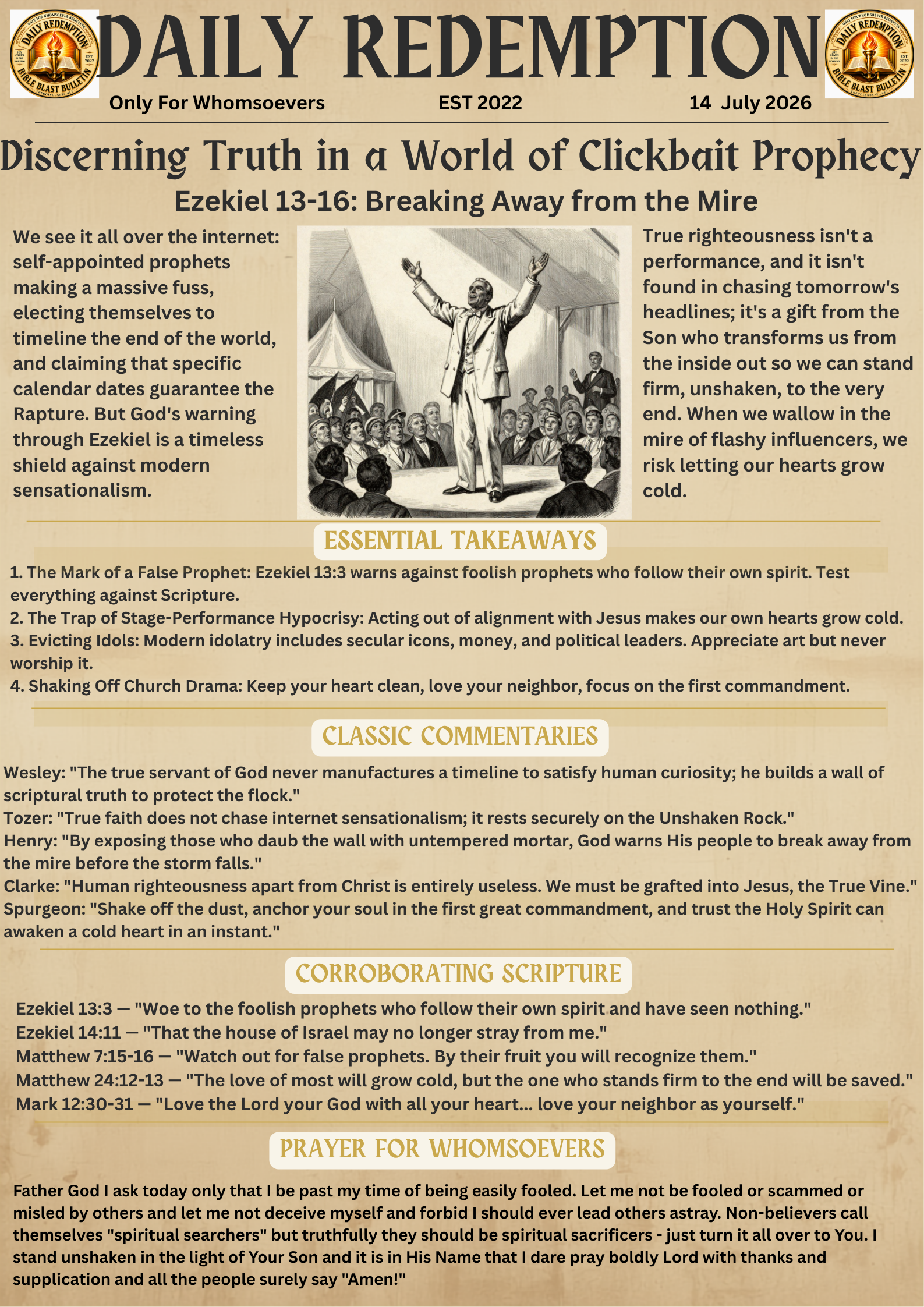
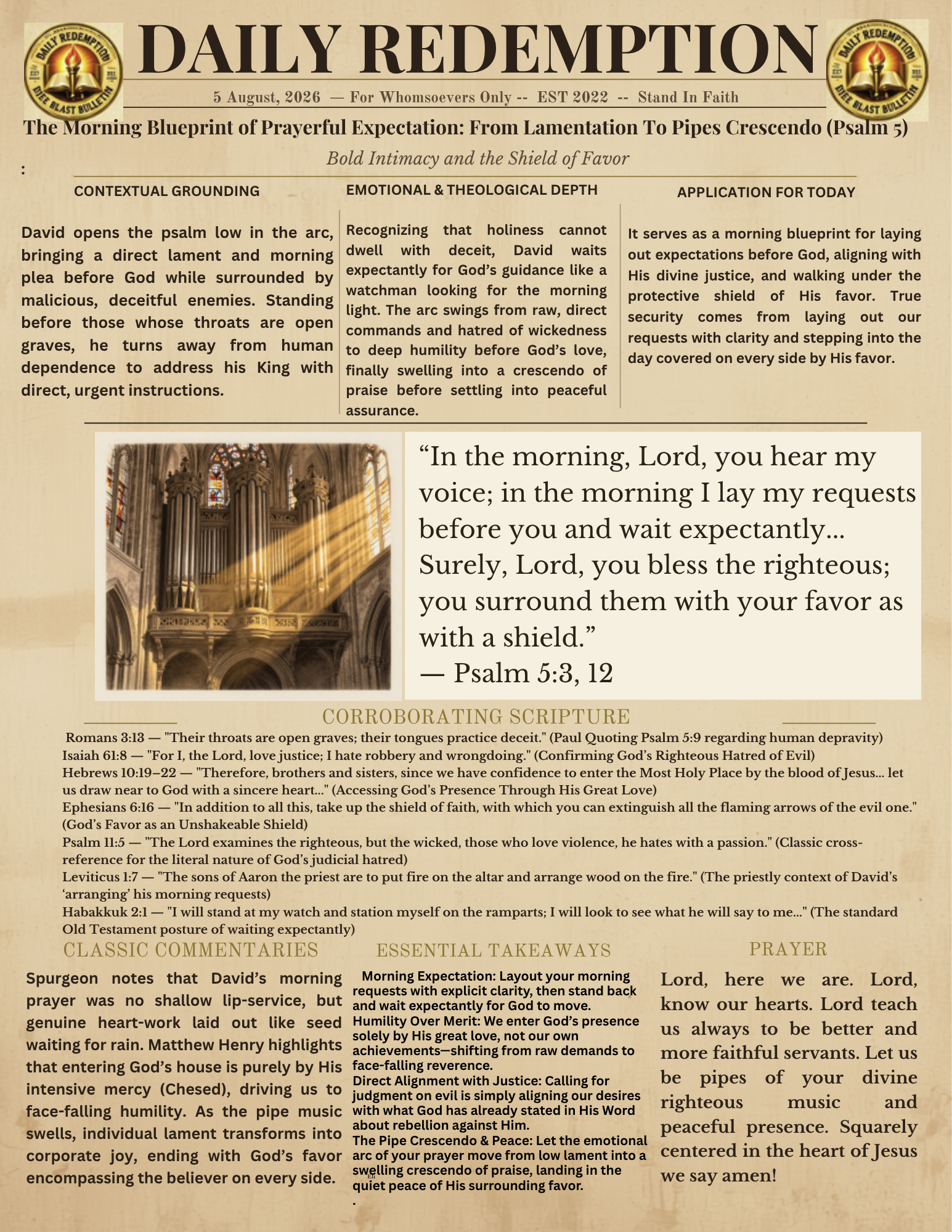
* Contextual Grounding: David opens the psalm low in the arc, bringing a direct lament and morning plea before God while surrounded by malicious, deceitful enemies.
* Emotional & Theological Depth: Recognizing that holiness cannot dwell with deceit, David waits expectantly for God’s guidance like a watchman looking for the morning light.. The arc swings from raw, direct commands and hatred of wickedness to deep humility before God’s love, finally swelling into a crescendo of praise before settling into peaceful assurance.
* Application: It serves as a morning blueprint for laying out expectations before God, aligning with His divine justice, and walking under the protective shield of His favor.
——————————
## III. CORE COMMENTARY
Listen to my words, Lord, consider my lament.
Zeb commentary: David tells the Lord to listen to his words. That is a direct command of sorts with precise instructions. He might have said listen to my heart. David starts the arch low here we immediately know he is lamenting something.
* [CLASSIC COMMENTARY]: Charles Spurgeon (Treasury of David) notes that “lament” or “meditation” shows David’s prayers were not shallow: “It is well when we can look back upon our prayers and say, ‘They were not mere lip-service; they were heart-work.'”
Hear my cry for help, my King and my God, for to you I pray.
Zeb commentary: “there’s nobody else here Lord, just You and me and I know you hear me. I’m in trouble. Please heed”
* [CLASSIC COMMENTARY]: Matthew Henry emphasizes the legal force of “my King”: “David drops all earthly dependence. He addresses God as his King, to whom he owes allegiance, and from whom he expects protection.”
In the morning, Lord, you hear my voice; in the morning I lay my requests before you and wait expectantly.
Zeb commentary: I am here waiting on you Lord, I have expectations.
* [CLASSIC COMMENTARY]: Matthew Henry focuses on the morning altar: “Morning prayer is a Christian duty. We are to direct our prayer like an arrow to the mark, and then look up to see if it hits.” Spurgeon adds on waiting expectantly: “We must look up… like a husbandman who has cast in the seed and looks for the shower.”
For you are not a God who is pleased with wickedness; with you, evil people are not welcome.
because You know me. You know my heart. I know You. We “complete” each other. You hate the wicked, I am righteous.
The arrogant cannot stand in your presence. You hate all who do wrong;
Zeb commentary: The translation from the Hebrew is accurate this time. The word used does translate to “hate” or “detest” and it also can mean “rejection, alienation, or turning away”. Of course, in Isaiah and many other places, God does refer to the wicked with this sentiment of hate, despise, etc. David is on solid ground here.
you destroy those who tell lies. The bloodthirsty and deceitful you, Lord, detest.
* [CLASSIC COMMENTARY]: Charles Spurgeon addresses the literal reality of God’s hatred for the wicked here: “It is a sweeping hyperbole to say God hates the sin but loves the sinner. Here, David states God hates the workers of iniquity. Divine justice cannot tolerate unrepentant status.”
But I, by your great love, can come into your house; in reverence I bow down toward your holy temple.
Zeb commentary: OK David, that is more like it. The Lord’s love, not David’s allows him into the House. Something more approximating face-falling knee-riding humility in his engagement with the Almighty.
* [CLASSIC COMMENTARY]: Matthew Henry observes the shift to grace: “David does not plead his own goodness, but God’s intensive mercy (Chesed). The more we see of God’s love, the more we are driven to a holy, face-falling fear.”
Lead me, Lord, in your righteousness because of my enemies—make your way straight before me.
Zeb commentary: now he is back to barking orders again lol that was fast. But why? So that he can have the most streamlined direct, satellite-dish-exposed-to-Southern-sky connection for the best understanding – so God gets it right?
* [CLASSIC COMMENTARY]: Charles Spurgeon highlights the exposure to enemies: “The Hebrew signifies ‘those who lie in wait for me.’ David asks for a plain, level path so his enemies cannot catch him slipping or bring shame on God’s name.”
Not a word from their mouth can be trusted; their heart is filled with malice. Their throat is an open grave; with their tongues they tell lies.
Declare them guilty, O God! Let their intrigues be their downfall. Banish them for their many sins, for they have rebelled against you.
Zeb commentary: David here tells God how to administer His justice. But he gets it all into alignment by telling God it is because the wicked have rebelled against the Lord. the Lord is very well aware. So this is more an attempt to steer God’s attention to what He already knows and has said in His Word.
* [CLASSIC COMMENTARY]: Matthew Henry explains that David’s imprecatory requests are judicial, not personal malice: “These prayers are prophecies of the destruction of Christ’s enemies. They have rebelled against God, and David is simply signing his assent to God’s legal decree.”
But let all who take refuge in you be glad; let them ever sing for joy. Spread your protection over them, that those who love your name may rejoice in you.
Zeb commentary: big uptick of David’s emotional arch here towards praise and worship. The music for this piece is to be played on pipes. If I was conducting the music would swell to crescendo here.
* [CLASSIC COMMENTARY]: Charles Spurgeon notes the transition from the individual to the congregation: “The pipe music swells from a single weeping soul into the corporate harmony of all saints. Joy is the duty and heritage of the church.”
Surely, Lord, you bless the righteous; you surround them with your favor as with a shield.
Zeb commentary: followed by softer tones from the pipes. David is at peace. He knows He is kept and protected by the Lord.
* [CLASSIC COMMENTARY]: Matthew Henry concludes on the shield: “God’s favor is a universal defense. It is a shield that encompasses the believer on every single side, leaving no exposure to the enemy.”
——————————
## IV. CORROBORATING SCRIPTURE & CHRISTOLOGICAL CONNECTIONS
* Romans 3:13 — “Their throats are open graves; their tongues practice deceit.” (Paul Quoting Psalm 5:9 regarding human depravity)
* Isaiah 61:8 — “For I, the Lord, love justice; I hate robbery and wrongdoing.” (Confirming God’s Righteous Hatred of Evil)
* Hebrews 10:19–22 — “Therefore, brothers and sisters, since we have confidence to enter the Most Holy Place by the blood of Jesus… let us draw near to God with a sincere heart…” (Accessing God’s Presence Through His Great Love)
* Ephesians 6:16 — “In addition to all this, take up the shield of faith, with which you can extinguish all the flaming arrows of the evil one.” (God’s Favor as an Unshakeable Shield)
* [ADDED] Psalm 11:5 — “The Lord examines the righteous, but the wicked, those who love violence, he hates with a passion.” (Classic cross-reference for the literal nature of God’s judicial hatred)
* [ADDED] Leviticus 1:7 — “The sons of Aaron the priest are to put fire on the altar and arrange wood on the fire.” (The priestly context of David’s ‘arranging’ his morning requests)
* [ADDED] Habakkuk 2:1 — “I will stand at my watch and station myself on the ramparts; I will look to see what he will say to me…” (The standard old testament posture of waiting expectantly after setting the altar)
——————————
## V. ESSENTIAL TAKEAWAYS
* Morning Expectation: Layout your morning requests with explicit clarity, then stand back and wait expectantly for God to move.
* Humility Over Merit: We enter God’s presence solely by His great love, not our own achievements—shifting from raw demands to face-falling reverence.
* Direct Alignment with Justice: Calling for judgment on evil is simply aligning our desires with what God has already stated in His Word about rebellion against Him.
* The Pipe Crescendo & Peace: Let the emotional arc of your prayer move from low lament into a swelling crescendo of praise, landing in the quiet peace of His surrounding favor.
——————————
## VI. PRAYER FOR WHOMSOEVERS
Lord, here we are. Lord, know our hearts. Lord teach us always to be better and more faithful servants. Let us be pipes of your divine righteous music and peaceful presence. Squarely centered in the heart of Jesus we say amen!